In an industry saturated with fleeting trends and surface-level strategies, the 2025 Multifamily Marketing (Anti) Trends Guide challenges marketers to think deeper. This report moves beyond the noise to focus on what truly matters – actionable strategies that prioritize long-term impact over short-term wins.
It’s time to rewrite your marketing playbook.
We’ve developed five strategic priorities for you to kick off the year and beyond strong.
What’s Inside
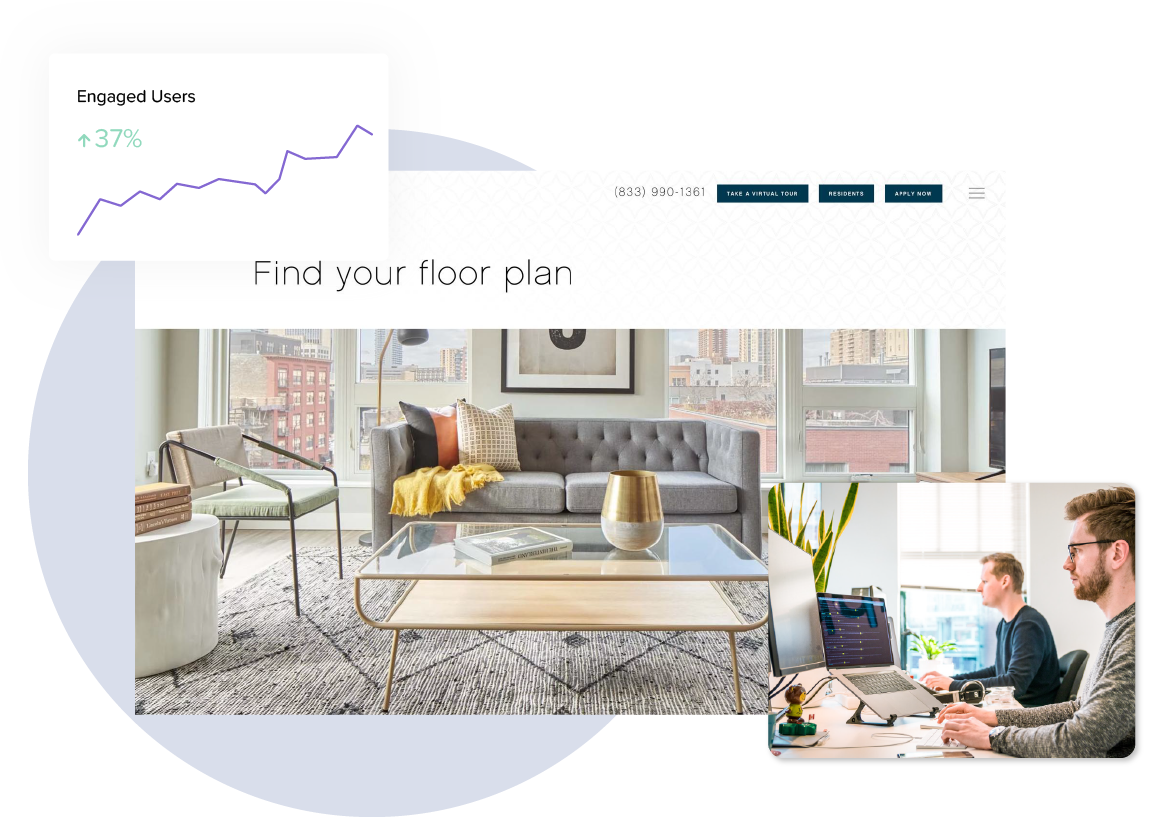
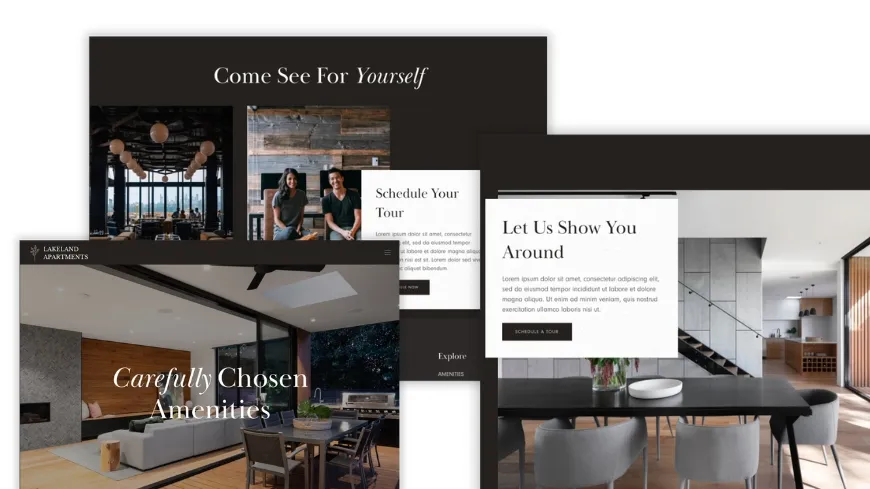
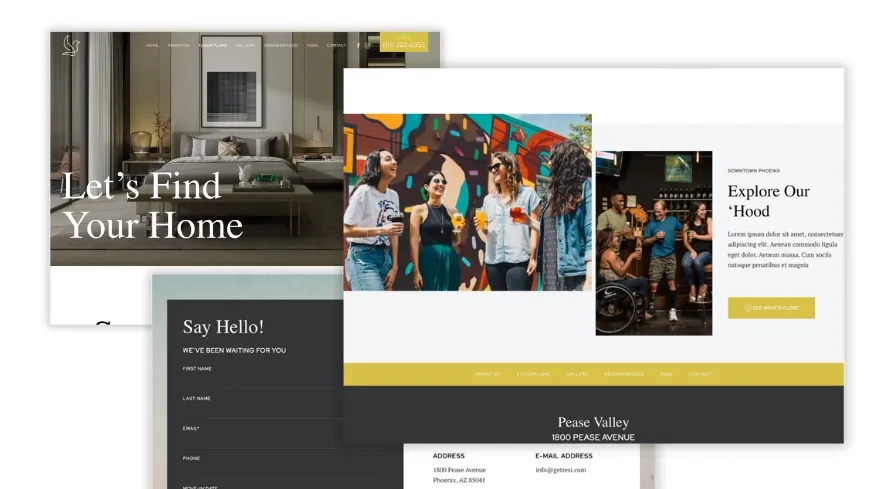
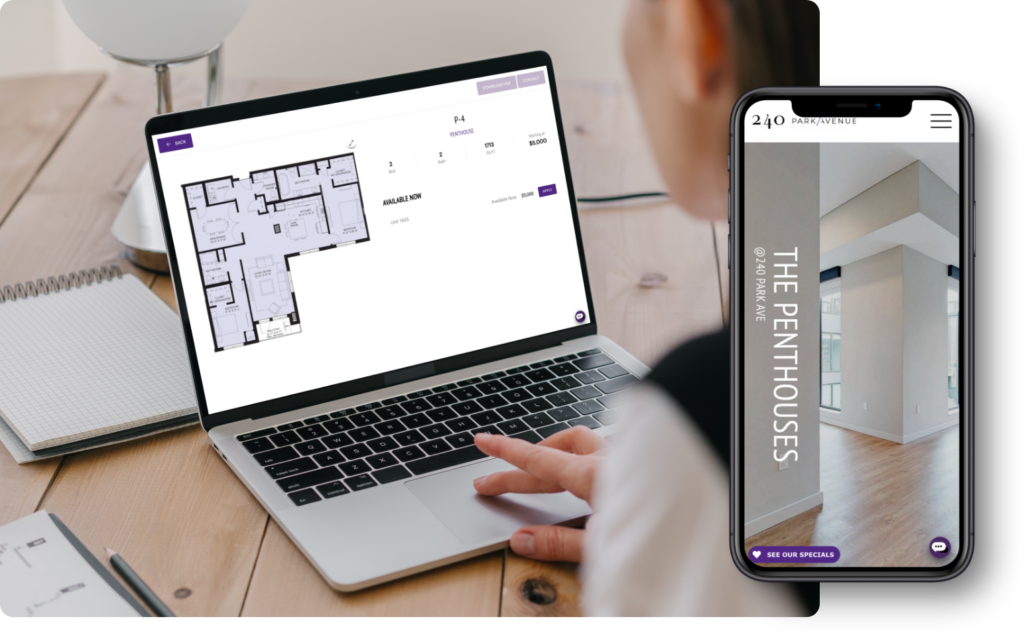
How to build property websites that act as dynamic, ecommerce-level leasing tools, seamlessly integrating technology and storytelling to engage renters 24/7.
The key to unlocking enterprise-scale marketing operations that shifts your organization from piecemeal, manual, and siloed property-specific efforts to a unified and systematic approach to marketing efforts that maximizes efficiency, drives performance, and builds consistent brand equity.
Why data is dethroning content as king and how clean data and centralized insights can drive better marketing decisions and improve NOI.
How storytelling and human-centric marketing foster emotional connections, trust, and long-term renter loyalty in a crowded marketplace.
A mindset shift on and how to think like a renter, act like a concierge, and operationalize your marketing for the success of your renter strategy long-term.
Ready to Rewrite Your Marketing Playbook?
Put aside fleeting trends.
Focus on long-term impact.
Transform your multifamily marketing strategy, for good.
"*" indicates required fields
By completing the form and submitting your information above, you are agreeing to receiving emails and our Privacy Policy.
Property marketing — scaled.
Multifamily’s only enterprise-scale marketing platform. Designed to optimize your top-of-funnel marketing.
Resi, a leading provider of digital marketing solutions for the multifamily industry, has entered into a strategic partnership with Hawthorne Residential Partners, one of the nation’s top multifamily investment, development, and operator firms. This partnership is designed to optimize the digital marketing strategies for a portion of Hawthorne’s 60,000+ units across 250 properties throughout the Sunbelt, empowering the firm to strengthen its online presence and improve leasing outcomes through enhanced website performance and advanced technology integration.
Hawthorne, known for its dedication to creating exceptional residential experiences, recently completed a brand refresh, and they sought to align their performance marketing efforts with their updated brand identity. By partnering with Resi, Hawthorne can now scale their digital marketing strategy across multiple properties while ensuring brand consistency and compliance with industry standards. To learn more about Hawthorne’s project, read more at http://getresi.com/customer/hawthorne-residential-partners/.
“We trust you guys,” said Ashley Laster, Vice President of Brand and Innovation at Hawthorne. “We know you’ll give us full transparency on performance… and access to the most clean GA4 account that I’ve ever seen.”
Resi’s Website as a Service model provides Hawthorne with customized property websites that not only meet rigorous performance requirements but also offer flexibility for managing content at scale. The solution includes robust content management tools, seamless integrations with third-party platforms such as Yardi RentCafe and Knock, and data-driven insight reporting that allow Hawthorne’s marketing team to make informed decisions based on real-time analytics.
“From day one, Hawthorne’s focus has been all about their people – a value that aligns so deeply with us,” said Grady Newman, Founder at Resi. “By providing new insights to their onsite teams through the Resi App and embracing mobile-first designs optimized for their renters’ experience, they’ve set the standard for excellence. It’s no wonder they lead the industry in online reputation.”
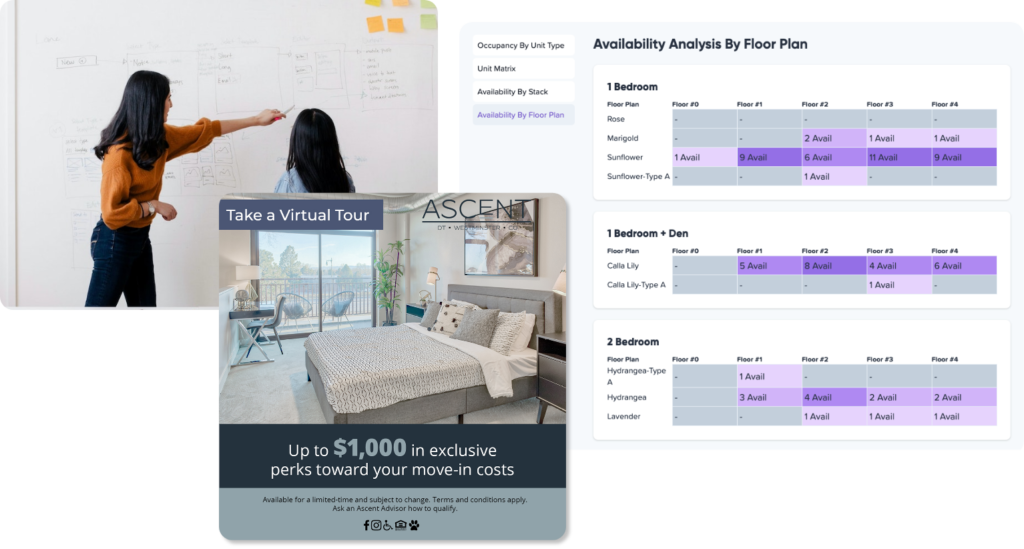
This collaboration also leverages Resi’s expertise in data architecture and how that is managed in their proprietary marketing platform, the Resi App. Data from website analytics, the PMS, and more combine into insightful and actionable reporting. These insights help Hawthorne’s marketing and operations teams make data-informed decisions, resulting in better occupancy rates and an optimized, scalable marketing strategy.
With a reputation as the industry leader in online reputation performance for four consecutive years, Hawthorne has relied on Resi to ensure that their digital presence reflects the same level of excellence. The collaboration reinforces both companies’ shared commitment to innovation and resident satisfaction.
Resi is a leading provider of innovative marketing technology solutions for the multifamily industry, dedicated to enhancing property management and resident experiences. Resi’s mission is to connect people and places through technology. For more information about Resi, visit getresi.com.
Effective content and communication is a must today. At Resi, we believe in the strength of the narrative transportation theory as a tool for creating engaging content.
This framework revolves around the idea that if a story is engaging enough, readers can mentally transport themselves into the world of the narrative. For multifamily marketers, crafting stories that invite potential residents to envision themselves living and thriving in a community can be particularly powerful. By describing a day in the life at a multifamily unit or sharing resident success stories, marketers can effectively use this technique to create a strong emotional connection.
What is your property’s story?
What elements make up an effective story?
The Narrative Transportation Theory suggests that people are more likely to be persuaded and emotionally engaged with a narrative when they are “transported” into the story world. For multifamily marketers aiming to leverage this theory effectively in their content, several key elements must be incorporated to ensure success:
Strong Narrative Structure
The story should have a clear beginning, middle, and end. The beginning sets the scene and introduces the characters; the middle presents challenges or conflicts; and the end provides resolution. This structure helps to draw the audience into the story, making them more receptive to the message.
Vivid Imagery and Descriptions
Utilizing descriptive language that evokes the senses can help the audience visualize the setting and events of the story. This can include detailed descriptions of the property, community events, or lifestyle possibilities that allow the reader to “see” themselves in the environment.
Allow the reader to “see” themselves in the environment.
Relatable Characters
Characters in the story should be relatable to the target audience. For a multifamily community, this could be residents who share similar lifestyles, challenges, or aspirations as the prospective residents. Characters that reflect the audience’s demographic and psychographic traits can enhance the transportation experience.
Your property’s narrative should strive to evoke emotions.
Emotional Connection
The narrative should aim to stir emotions. This could be through storytelling techniques that evoke happiness, satisfaction, a sense of belonging, or even aspirational desires related to living in the multifamily community. Emotional engagement is a critical driver of narrative transportation.
Conflict and Resolution
Introducing a conflict or problem that the characters face and then providing a resolution not only maintains engagement but also demonstrates the value proposition of the multifamily property. For example, a story might describe a resident overcoming the challenge of remote work thanks to the community’s state-of-the-art co-working spaces.
The story should align with the values of your intended audience.
Consistency and Believability
The story must be internally consistent and believable; it should not contain elements that break the narrative flow or contradict established facts or the audience’s understanding of the world. This also means avoiding over-exaggeration that could lead to skepticism.
Cultural Relevance
The story should align with the cultural background and values of the intended audience. This ensures that the narrative is appropriate and resonant, increasing the likelihood of transportation.
Interactive Elements
Especially in digital marketing, engaging the audience with interactive story elements such as clickable content within a story, video tours, or resident testimonials can enhance the immersion experience.
Calls to action should feel like a natural extension of the journey.
Clear Call to Action
After leading the audience through the narrative, it’s important to guide them towards a specific action, like scheduling a visit, signing up for a newsletter, or contacting the leasing office. This call to action should feel like a natural extension of the narrative journey.
Engaging Renters: Putting It Into Practice
Incorporating Narrative Transportation Theory into various aspects of marketing—like copywriting, photography, and other mediums—can significantly enhance the emotional and persuasive impact of the content. Here are practical examples showing how to weave narrative elements into these different mediums, enhancing engagement and conversion.
Use vivid language and storytelling techniques.
Copywriting
Do This:
“Imagine starting your day with a warm cup of coffee on your private balcony, as the city wakes up around you.”
“Meet Sarah and John, who found a lively community of young professionals and now enjoy weekend BBQs at the rooftop garden.”
Instead of This:
“Our apartments feature private balconies and a rooftop garden.”
Capture residents genuinely enjoying community amenities.
Photography
Do This:
Use photos that capture residents genuinely enjoying community amenities, such as a group of friends laughing around a fire pit.
Showcase a family day event with children playing and parents socializing, to emphasize the family-friendly environment.
Instead of This:
Generic images of empty amenities or staged, unnatural resident interactions.
Video Marketing
Do This:
Create a “day in the life” video featuring a resident who takes the viewer on a tour of the property, highlighting favorite spots like the cafe or gym, and ends with a testimonial about why they love living there.
Produce testimonial videos focusing on personal stories, like a resident who moved from a different city and found a supportive community at the complex.
Instead of This:
A straightforward video tour of the property without any personal engagement or storytelling elements.
Share resident reviews or stories.
Social Media
Do This:
Post a series of “Story Sundays” where different residents share a personal story about a community experience or how the apartment complex has enhanced their lifestyle.
Use Instagram stories to showcase a real-time event at the property, like a cooking class or a pool party, with residents sharing their experiences live.
Instead of This:
Posting only promotional content or high-level features of the property without engaging stories or resident experiences.
Showcase how the location has enhanced residents’ lifestyles.
Email Marketing
Do This:
Send out a monthly newsletter that includes a “Resident Spotlight” section, where you tell the story of one resident’s achievements or community involvement.
Feature a story about how the community came together to support a local charity event, highlighting the residents’ involvement and the positive outcomes.
Instead of This:
Generic emails that only include updates about the property or reminders about rent and policies.
Blog Posts
Do This:
Write a blog post titled “A Year at [Property Name]: A Resident’s Journey,” detailing a resident’s experiences and how the community has positively impacted their life.
Feature guest posts from residents who write about their hobbies, experiences in the community, and tips for new residents.
Instead of This:
Only posting blogs about apartment living tips or decorating ideas without connecting to personal resident stories.
Use imagery and captions in brochures that tell a story about community engagement or sustainability aimed to enhance resident lifestyle.
Print Marketing
Do This:
Design brochures that include narratives from current residents, describing why they chose to live there and what their day-to-day life is like.
Use imagery and captions in brochures that tell a story about community engagement, such as photos from a recent event accompanied by quotes from participants.
Instead of This:
Standard brochures that list amenities and floor plans without integrating any personal stories or resident testimonials.
By using these strategies, multifamily marketers can effectively apply Narrative Transportation Theory across all marketing channels, enhancing the way potential residents emotionally connect with the property and envision themselves as part of the community. This approach not only increases engagement but also fosters a deeper sense of belonging and satisfaction among residents.
Most people I ask are not familiar with this term.
As November marks American Indian Heritage Month, Thanksgiving, and Native American Heritage Day, I thought it would be a good opportunity to discuss a practice I have found meaningful and would like to continue to see expand, especially in the real estate industry. While many take this time of year to reflect on what they are thankful for, it is also a time to remember the violence and oppression that Native Americans have historically faced in this country.
Growing up in Minnesota, a state whose name comes from a Dakota word (Mni Sota Makoce), understanding our relationship to the indigenous people and their lands has always been close to me. I was fortunate to be educated about this from a very young age and grew a deep respect for the indigenous people and their culture that I continue to carry today.
So, what is land acknowledgement?
Essentially, it’s a formal statement paying homage to the indigenous people who originally inhabited the land upon which you are building, living, or using and recognizing them as the traditional stewards of the land.
Before you begin, please note this should NOT be used as a marketing gimmick or looked at as a box to check on your marketing list. Rather, land acknowledgement should be a part of your marketing strategy with actions that go beyond a statement to support the indigenous people.
To begin your land acknowledgement journey here are a few ideas to start your research:
The indigenous people to whom the land belongs.
Indigenous place names and language.
The history of the land and any related treaties.
Names of individual people from these communities.
Correct pronunciation for the names of the Tribes, places and individuals that you’re including.
Make your statement clear and don’t sugarcoat the past. Embrace the history and celebrate the new relationship you hope to instill with the indigenous people.
If you are considering adding a statement to your property website, I commend your efforts and it is my hope that your statement is just a starting point.
That said, don’t get caught up on the language you use. Instead, spend more time thinking about and taking action to support indigenous communities. Here are a few ways you can do that:
Build real, authentic relationships with indigenous people.
Donate your time/money to indigenous organizations.
Support indigenous-led grassroots movements.
Be considerate of the emotional weight this topic can carry.
Ask how you can help!
Next time you are visiting a property, just think…
Have you or your organization taken any steps to recognize and support the indigenous people who originally inhabited this land?
PPC advertising is one of the most important marketing tools available to apartment complexes today. By targeting potential renters through online ads, apartment complexes can reach a larger audience and significantly increase their chances of leasing units. However, apartment PPC can be expensive. That’s why it’s important to make sure you’re getting the most out of your apartment PPC campaigns.
When you’re advertising an apartment community, it’s important to make sure that your campaigns are constantly being tweaked and adjusted in order to get the best return on your investment. In this blog post, we’ll discuss some of the things you need to keep in mind when running your multifamily PPC campaigns, as well as ways to improve them.
1. Inventory-driven Budget Adjustments
Throughout the lease up process, your available unit mix will changes as your inventory fills up. In most cases, you likely see different types of prospects interested in different unit types and layouts, your advertising campaign should be adjusting to to meet those needs as they change.
Ask yourself, why are you spending dollars to market to prospects looking for two bedroom units, when you only have one available? Or on the flip side, after stabilization, are you adjusting your ads based on your expected turnover?
Seems pretty simple right? You should adjust your budgets to a higher amount when you have more units to fill and turn it down during the periods where your occupancy is more stable. You’d be surprised how many companies and agencies are content with setting a budget and sticking to it all year long. These wasted dollars could have been put to use when you needed them much more.
Whether you adjust your overall budgets to different ad groups, or you can hyper-focus on a keyword level, making these dynamic shifts are what differentiate the performance of an average and a great ad campaign.
At Resi, we call this inventory-driven advertising and it is a primary factor in our advertising work for properties, as well as seasonality, performance, property geography, weather, leasing goals and many others. Read on to learn how we approach many of them.
2. Add appealing imagery
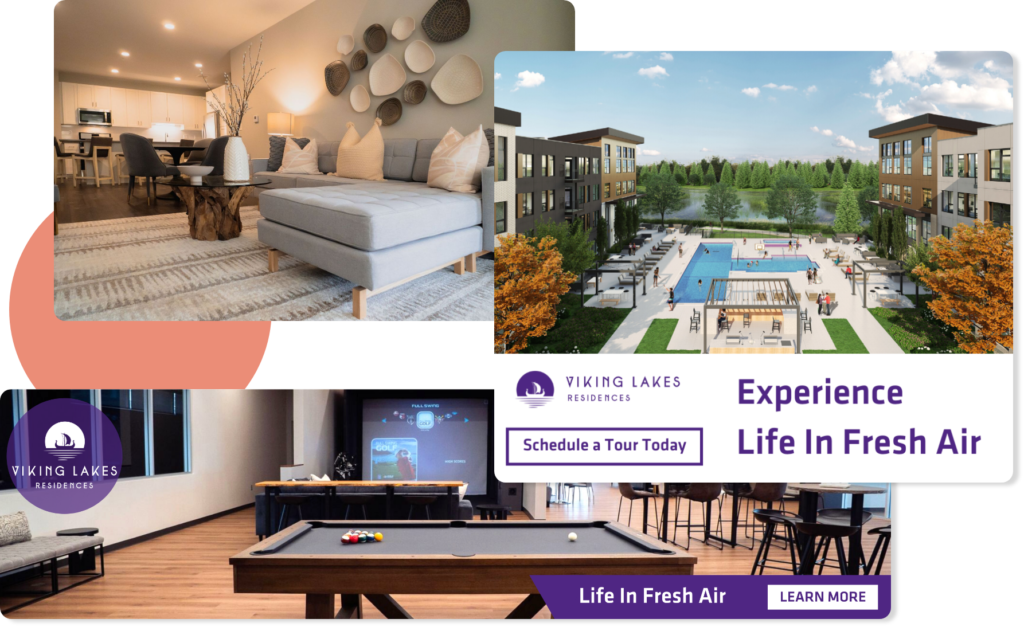
Property photos are one of the most important factors when determining how successful your ad campaigns will be. That said, not just any image will do, but make sure your images are both high-quality and inline with what will appeal to your target audience when they see your ad.
For example, if you’re advertising an apartment community in San Diego with beach views, then your ad should definitely include a photo of the ocean. Not only will people be more likely to click on it because they are drawn visually to what’s shown but also because these types of images tend to attract people who are looking for those kinds of things when searching online.
The same is true for other cities that offer specific amenities like parks or mountains nearby – make sure there’s something appealing about your property before using photos within ads!
In fact, even if there aren’t any natural features around, “ads with pictures receive up to 42% more clicks than ads without pictures,” according to a study by Google.
If you don’t have any high-quality pictures yet – maybe now would be time to get some taken by a professional photographer (or at least yourself). Also check out our other blog post “What to look for in a good property photographer.” Good luck!
3. Adjust your budget for leasing seasonality
Just as you would expect, leasing activity differs throughout the year. Depending on your market and the time of year, there may be more or less people searching for apartments online.
What that means is that your PPC budget should also adjust accordingly – especially if you’re looking to achieve a certain goal like filling up all of your units before a given deadline.
For example, in markets with high leasing seasonality (like college towns), it’s important to increase your budgets during those times so you can stay competitive against local competitors. Conversely, in slower seasons you can afford to decrease them without sacrificing leads or traffic too much.
By shifting your budgets to when you have the need for the most leasing activity, your digital ROI will improve significantly and your leasing metrics will be more representative of the actual supply and demand of your inventory. This is a great way to look very smart to your asset management teams without having to ask for larger budgets!
4. Understand how far out your prospects are looking
It’s not just important to know how often you should be adjusting your campaigns, but also knowing how far out in advance prospects are looking for their next apartment.
That way, you can make sure that your ads are seen by the right people at the right time. For example, if someone is only looking a month or two in advance, then you don’t want to waste money advertising units that won’t be available for another few months.
On the other hand, if someone is already looking several months ahead, then it might be a good idea to start advertising now so they’ll remember your property when it comes time to choose.
At Resi we use data science and predictive modeling techniques to help our clients understand how far out their different target audiences are searching for their next home.
5. Create urgency with limited-time offers
One of the most effective ways to get people to act quickly is by using a limited-time offer (LTO).
By adding an expiration date or countdown timer to your ads, you can create a sense of urgency that will prompt more prospects to take action.
For example, if someone sees an ad for a $500 off move-in special that’s only good for the next few days, they are much more likely to click on it than if the same deal was just sitting there without any time constraint.
At Resi we specialize in creating and managing unique LTO campaigns that stand out from your competitors that are all running similar offers – so if you’re looking to boost traffic and leads quickly, then this is definitely something worth considering.
6. Improve On-site conversions with dedicated landing pages
Another way to improve your PPC performance is by directing all of your traffic to a dedicated landing page.
This will help you track conversions much more accurately, as opposed to just tracking clicks from your ads. Plus, it allows you to customize the user experience on that page so that it’s more in line with what they were expecting when they clicked on your ad.
For example, if someone clicks on an ad for a one-bedroom apartment, then they should be taken to a landing page that specifically shows one-bedroom units. This will help reduce confusion and increase the chances of them submitting an application.
Not only does a custom user experience improve the likelihood of conversion, but ads that link to landing pages with a higher landing page rating will receive a higher placement in Google’s algorithm. That’s right! A better landing page can actually help you improve your ROI from ads on both cost and conversion.
At Resi we create custom-built and dedicated landing pages for all our clients and have found significantly higher conversion rates for properties that use this tool.
7. Expand your target audience profiles
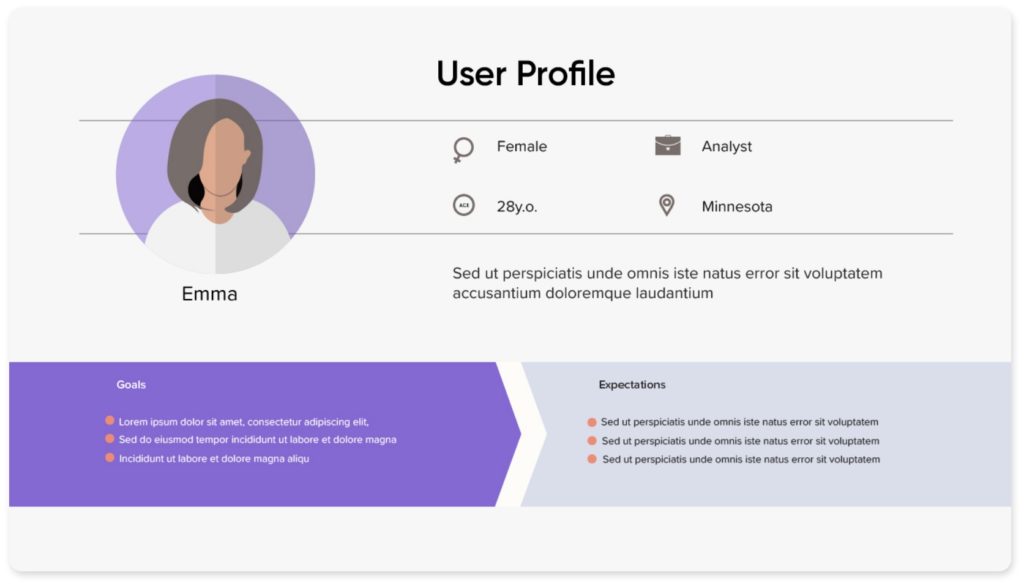
Due to privacy concerns and a shift in how user’s control their data, targeting your ideal customers has become more and more difficult. One way to improve your PPC results is by expanding the depth of your target audience profiles. This means including the magazines they read, the stores they shop at, and even the causes they care about.
By understanding your target audience better, you will be able to better define who you are targeting and relate to them with your ad imagery and copy.
At Resi we leverage our in-house research and experience to identify audience segments that you should be targeting by creating very detailed target profiles with data points that can be focused on.
8. Regularly shift your keywords based on performance
As your individual market changes (new construction, newly renovated units, etc.), and the apartment renter’s search habits change, your ad keywords should also change. By regularly adjusting your keywords, you can make sure that your ads are always relevant to what prospects are searching for. Additionally, you can use keyword data to understand what type of language resonates best with your target audience. One of the most important things to remember about PPC advertising is that your keywords need to be constantly updated based on performance.
There are a few key metrics that you should look at when analyzing the performance of your keywords:
Click-through rate (CTR): This is the percentage of people who see your ad and then click on it. A high CTR indicates that your ads are relevant to the searcher and are getting noticed.
Conversion rate: This is the percentage of people who click on your ad and then take the desired action, such as submitting an application or scheduling a tour. A high conversion rate indicates that your ads are effective at driving leads.
Cost per lead: This is how much you’re spending for each lead that you generate from your PPC campaigns. A lower cost per lead means you’re getting more bang for your buck.
Return on Ad Spend (ROAS): This is how much revenue you’re generating for each dollar you spend on your PPC campaigns. A higher ROAS means you’re generating more revenue from your ads.
It’s also important to make sure that you are targeting the right keywords – ones that are relevant to your property and audience.
At Resi we use our team of experts to help clients choose the right keywords for their campaigns, as well as track their performance so they can be tweaked and improved over time. This allows us to stay ahead of the curve and ensure that our clients’ ads are always visible to their target audiences.
9. Optimize your keywords for voice search
With the continued growth of voice search, it’s important to start optimizing your keywords for this type of traffic. By optimizing your keywords for voice search, you can make sure that your apartment complex is one of the first results that appears when someone uses a voice assistant to search for apartment complexes in your area.
Here are a few tips for optimizing your keywords for voice search:
Use long-tail keywords: Long-tail keywords are longer, more specific keyword phrases that tend to be less competitive than shorter, more general keywords. By targeting long-tail keywords, you can make sure that your apartment complex appears in the results for voice searches.
Include natural language qualifiers: Natural language qualifiers are words or phrases that indicate the searcher’s intent. For example, including the phrase “near me” in your keywords indicates that you want your apartment complex to appear in the results for voice searches near the searcher’s location.
Use conversational language: When people use voice search, they tend to speak in complete sentences rather than typing in keywords. This means that you should use complete sentences and natural language in your keywords, rather than just strings of keywords.
By following these tips, you can make sure that your apartment complex is one of the first results that appears when someone uses a voice assistant to search for apartment complexes in your area.
10. Test different ad creatives and copy
One of the best ways to improve apartment PPC advertising is by split testing ad copy and creative. This allows you to see which combinations work best for your target audience and property. It also helps you understand what messaging resonates with people the most, and can help fine-tune your campaigns for maximum performance.
When split testing apartment PPC ads, there are a few key elements to test:
Ad headlines: Test different headlines to see which one gets the most clicks.
Ad descriptions: Test different descriptions to see which one drives the most conversions.
Images: Test different images to see which ones get the most attention from viewers.
Call to action: Test different calls to action to see which ones get the most people to click through to your apartment complex’s website.
By split testing your apartment PPC ads, you can improve your click-through rate, conversion rate, and ROAS. So don’t be afraid to experiment with different ad elements until you find what works best for your apartment complex.
At Resi we have seen significant increases when clients change their ads every two weeks or so – this allows us to keep the content fresh while also allowing us time between tests so we can properly evaluate results.
11. Use apartment-specific ad copy and landing pages
One of the biggest mistakes apartment marketers make is using apartment-generic ad copy and landing pages.
This means that they’ll write an ad for “Luxury Downtown Apartments” or something similar, which doesn’t tell people much about the property itself except its location and general price range (i.e., it’s expensive). And then when someone clicks on one of those ads, they’re taken to a generic apartment search page with no details whatsoever other than which neighborhoods are included in their results.”
Just as in any other industry, specific landing page experiences should be designed for particular ad copy and keywords to present a prospect with the content they are looking for. By designing ad campaigns with specific landing pages, you will see a boost in your engagement and conversions.
If you’ve made it to this point, Bravo! You are ready to head into your next marketing meeting with some good questions and great strategies to level up your ad game. If you have any questions, our team would love to chat with you, so let’s hop on a call.
By following the tips in this blog post, you’ll be able to improve your campaigns and get better results from your advertising dollars. While these are just a few apartment PPC tips that we think are essential for success, there are plenty of other apartment PPC strategies available. Our team focuses on creating a strategy for each property and organization that makes the most sense for their goals and budget. Are you ready to start seeing improved traffic and conversions? Contact us today to learn more about our apartment PPC services and how we can help you achieve your marketing goals.
If you’re reading this, then it’s likely that you own or manage a building or property with apartments to rent. You know that finding a tenant is about more than just putting out the word and hoping for the best. More often than not, tenants are going to be doing their due diligence before they sign a lease on any given space. This includes browsing online listings for hours on end until they find something that looks like it could work for them. If your listing isn’t listed on the first page of Google search results, then chances are good that nobody will ever see it!
As more millennials enter the workforce, they’re looking for high quality living spaces at affordable prices – but these two things don’t often come together. Since this group is willing to spend less time commuting than any previous generation, many are opting to live closer to city centers where rents are higher. This means that apartment websites need to offer features like interactive floor plans and 360° virtual tours that highlight the features of your apartments and to help justify these higher prices to potential renters.
Our goal in this post is to cover the lesser-known must-haves for your apartment websites to perform well in the years to come. We will continue to add to this post, so please check back for more important multifamily website strategies. Let’s start with the first thing you are going to encounter when visiting a website.
1. Your Apartment’s Website Must Load Fast
Let me repeat that. Your apartment’s website must load fast. I can’t stress this enough.
How long would you be willing to wait for this?
With most users visiting websites now from a mobile device, and all other content just a tap away, every millisecond counts toward making an impression on a renter.
Beyond potentially losing someone’s interest while they wait for your website to load. Imagery and frameworks that are not optimized for mobile, have a real cost for your end user as they have to use more data to download your website.
Wondering if your website speed is fast enough? We recommend plugging your website into Google’s PageSpeed Insights to see how you are doing. Now, getting the lowest load times possible is not the goal by itself, but should be balanced with your other marketing goals (i.e. Perhaps displaying more media may increase your page size, but it could serve to do a better job of qualifying potential renters and improving your conversions). These decision should be made as a part of your SEO strategy.
2. Mobile-responsive Is Necessary, But You Should Have A Mobile-first Design.
As technology continues to evolve, the need for businesses to be mobile friendly grows as well. It’s no longer enough for your business to have an online presence; it needs to be accessible on any device at anytime. A recent study by Emarketer found that “the average time spent with mobile increased by 31 minutes in 2020 to reach 4 hours and 16 minutes for US adults—and the gains are sticky.” This means people are constantly searching for information and browsing products or services on their phones, so it’s important that your business can compete in this market space with ease.
“The average time spent with mobile increased … to reach 4 hours and 16 minutes for US adults”
While a mobile-responsive apartment website is a must today. It’s important to optimize your site for mobile devices because it impacts how many people are visiting your site, what they think of the site’s design, and whether they are making purchases or signing up on the website. Mobile-first design is what you should be focused on, as this will make sure that everything is built for your primary user on mobile, but also optimized for all possible screens. Not sure what mobile-first design means, here’s a nice overview from BrowserStack.
The first step is assessing how well your current site works on mobile devices. Rather than assigning this out, or requesting that your developer accommodate these changes, we highly HIGHLY recommend that you simply pick up your phone and try to pretend being a renter on your own website. This should not be a simple checkbox on your marketing checklist. Take the time and make sure you can find what you want to easily on your site. Ask yourself is this really how I want renters to see our property?
As you are practicing this, please keep in mind, you know what you are looking for! Prospective renters do not know how you have laid out your site, where your navigation is, and or how to find the information they want. This brings us to our next point.
3. Look Great and Be Easy To Navigate
In 2022, your web presence simply must be aesthetically pleasing and be extremely intuitive to navigate. Your website template from 2015 just isn’t going to cut it anymore today. Users decide whether they like your apartment website in as little as 50 milliseconds, so it NEEDS to look amazing. You are trying to impress incoming renters, are you not?! Are you sure you want to fill their screen with popups and chatbots? If you are, you should have a very good reason.
Not only does your website need to look great on mobile, but your site needs to stand out. People are bombarded daily on their phone with notifications and apps trying to pull their attention. In fact, “people tapped, swiped and clicked a whopping 2,617 times each day, on average” according to a report by the research platform, Dscout. You need to find a way not only to stand out in this noise, but to capture the attention of your renters.
“People tapped, swiped and clicked a whopping 2,617 times each day, on average.”
The user experience you provide on your website is the first impression potential renters are going to have of your property, it deserve the utmost attention to detail. Your goal today should be for as flawless of an experience as possible. From filling out an initial contact form to completing the online leasing process and the move-in, all of your branding, communication and user experience, should be clean, personalized and consistent!
4. Accurate Pricing and Inventory
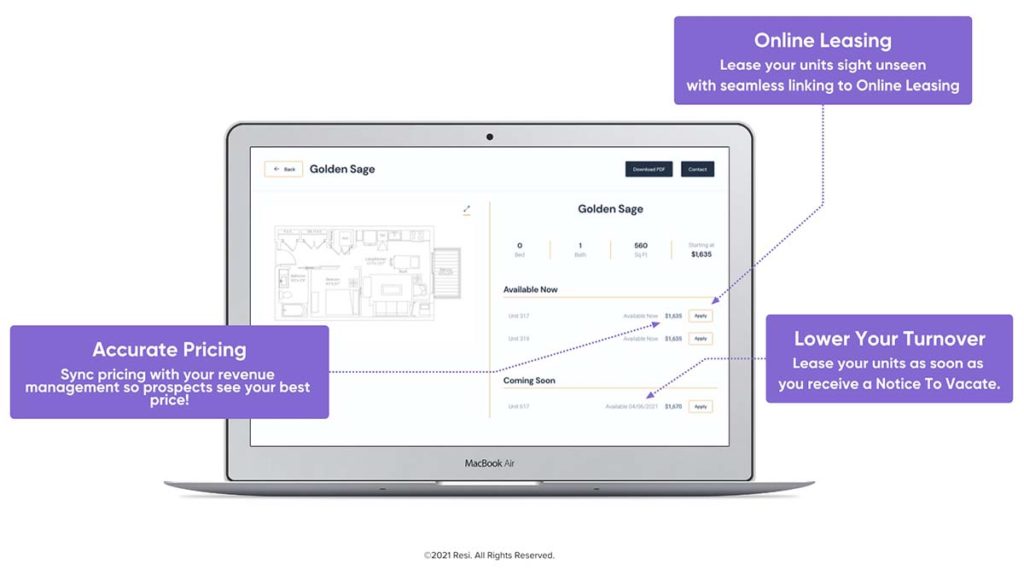
Nothing could be more frustrating as a prospective renter than to find the apartment you want to rent, only to start the application process or even just set up a tour and find out that the apartment is no longer available. Renters expect your website to be up-to-date with available inventory and real-time pricing.
You wouldn’t want someone to find an apartment on your website and then go submit their lead information via Zillow or apartments.com because that’s where they went to check availability, would you?
This is easily accomplished today, whether through a website provided by your property management software, or better yet, with a website that integrates with your management software, but provides an even better user experience.
Beyond creating and meeting the expectations of your target audience, there is the very valuable added bonus of how real-time inventory and pricing can improve your turnover costs. When a notice to vacate a unit is received in the future, your website should begin showing that unit immediately.
The world of web design is constantly evolving, and with it comes new standards. It’s important to be able to adjust as the times change, but what does that mean for your property website? What will happen if you don’t upgrade now? If you want to find out how we can help make your apartment building or property a more attractive online destination in 2022 and in the future, give us a call today!