
12 Google Business Profile tips multifamily marketers need for 2026

Most renters aren’t starting on your website. They’re starting on a map.
In the 2025 SatisFacts renter study, 41.4% of renters said they searched using local maps. Apartments.com surveyed roughly 27,000 renters this summer and put search engines at 32%, with 96% saying reviews matter to their decision. Meanwhile, most community Google Business Profiles haven’t been touched since somebody claimed them, back when the advice was “fill out every field.”
That advice is out of date. Google isn’t grading your profile on completeness. It’s deciding whether it believes what your profile says, and it’s checking that against a lot of other sources.
Two things happened recently that tell us how. Google shipped real changes to Maps and Business Profiles this year, all documented. And a research team pulled Google Maps apart and published the internal names of the 72 signals in its ranking system. Here are 12 fixes that come out of both.
How we know this, and what we don’t
The platform changes below link to Google’s own documentation. The ranking signals come from a technical study by Resoneo, published in August 2026, which recovered internal information out of Google Maps’ own software and published the full dataset.
Think of it like getting the parts list for an engine. You learn the name of every part. You don’t learn how much each one matters.
- Signal names are known. Their weights are not.
- 25 of the 72 named signals are already retired.
- Google has not confirmed the code findings and won’t.
- Every tip below is labeled Google’s documentation or Google’s code.
Part 1 · What Google’s own ranking code names
1. Your primary category is the only one that counts
Bottom line: Google treats one category as primary and every other one as background noise. There’s no partial credit for the rest.
Google’s code
The internal file stores your primary category at full value and every additional category at zero. It’s a switch, not a scale. Resoneo confirmed it by pulling the category list Google serves for a well known landmark: the primary shows on screen, and the other fifteen sit behind it in plain alphabetical order, carrying no ranking weight at all.
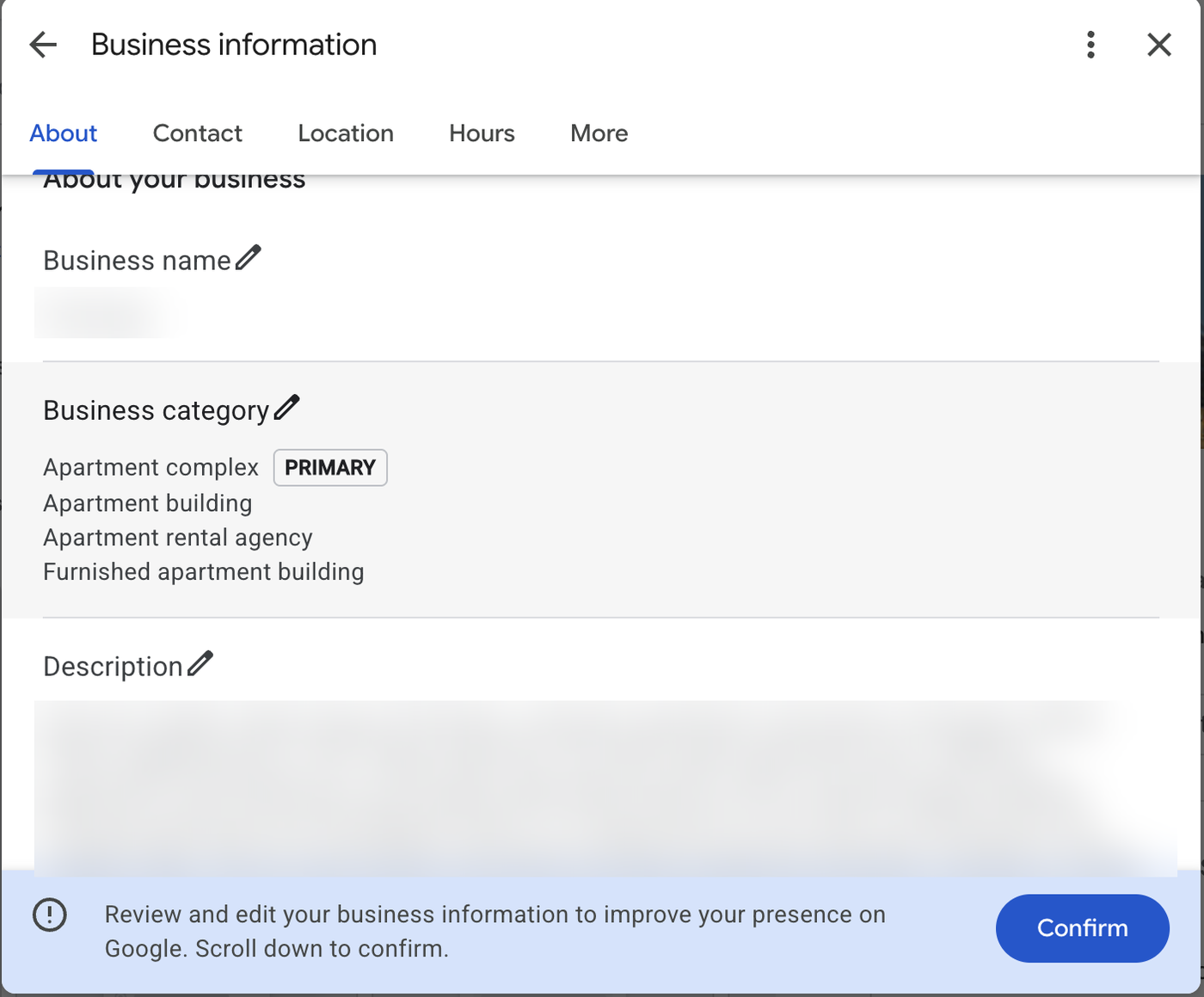
For a community, that means “apartment complex” versus “apartment building” versus “student housing” versus “senior apartment” isn’t a cosmetic choice. It’s the one category decision that lands.
Do this: open one profile and confirm the primary matches what your renters actually type.
2. Your communities probably don’t agree with each other
Bottom line: In one metro area, 21 locations of the same brand split 11 to 10 across two different primary categories. Nobody chose that.
Google’s code, observed in testing
Google even stores an “ideal state” for what a brand’s locations should share. Reality diverged anyway, in the same city, under the same brand.
If that happens to a retail chain with central control, it’s happening to your portfolio. Profiles get claimed over years by on-site teams, a previous agency, the prior management company. Nothing keeps them aligned, and nobody’s checking.
Run this before you touch anything else
- Pull every community’s primary category into one sheet
- Flag any that differ from the others
- Decide the correct primary per asset type
- Fix the outliers
- Recheck in 30 days to confirm they held
Do this: list every community and its primary category in one place, then find the disagreements. Doing this by hand across forty communities is its own problem, but the audit is worth the afternoon.
3. The taps matter more than the views
Bottom line: Getting directions, opening your listing, and tapping through to your website are each named signals in Google’s ranking code.
Google’s code
Impressions are in there too, but impressions aren’t something you can move. Taps are.
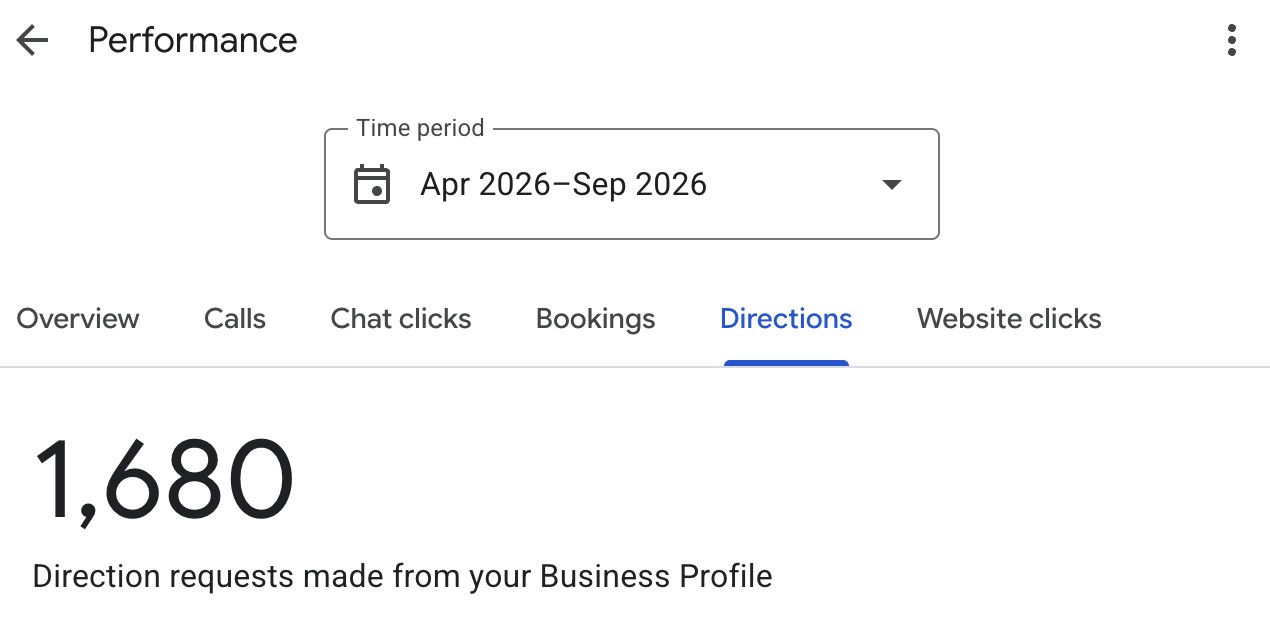
This reframes what your profile photos are for. The hero shot that earns a “directions” tap is doing ranking work, not just branding work.
Do this: read your profile insights like a leasing funnel instead of a vanity report. Track the actions, not the views.
4. Your property site is competing to be Google’s source about you
Bottom line: Google ranks web pages against each other for a specific place, deciding which page it treats as the authority on your community. That’s a different contest than ranking for a keyword.
Google’s code
There’s a whole layer that decides, page by page, which place a document is about, how much of the page concerns it, and how confident Google is. Then it ranks those documents against one another for that place. Resoneo found the internal description in plain language: a relative ranking signal between different documents for an entity.
So if a third-party listing page is better organized about your community than your own site is, that’s the page Google leans on when it needs a fact about you.
We wrote about the on-page half of this in Schema Is the Icing, Not the Cake. This is the other half.
5. Match your geography to your density, not your address
Bottom line: Google aims to fill roughly 20 results, then stretches or shrinks the search area until it can.
Google’s code, observed in testing
Resoneo measured it directly, running tests in France. A common search in dense Paris stayed under a kilometer. The identical search in a rural department reached 33 kilometers. The country doesn’t matter here. The density does.
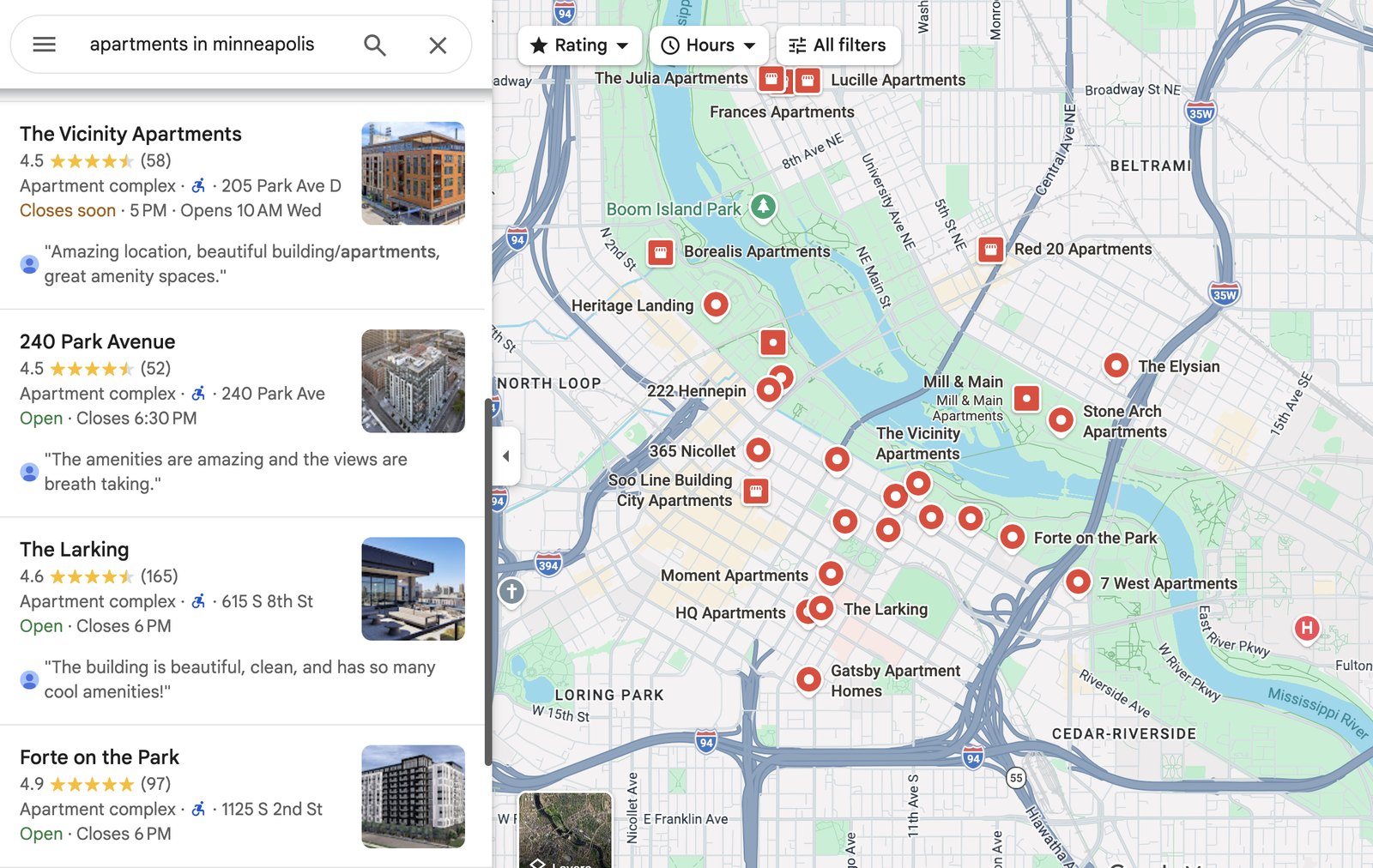
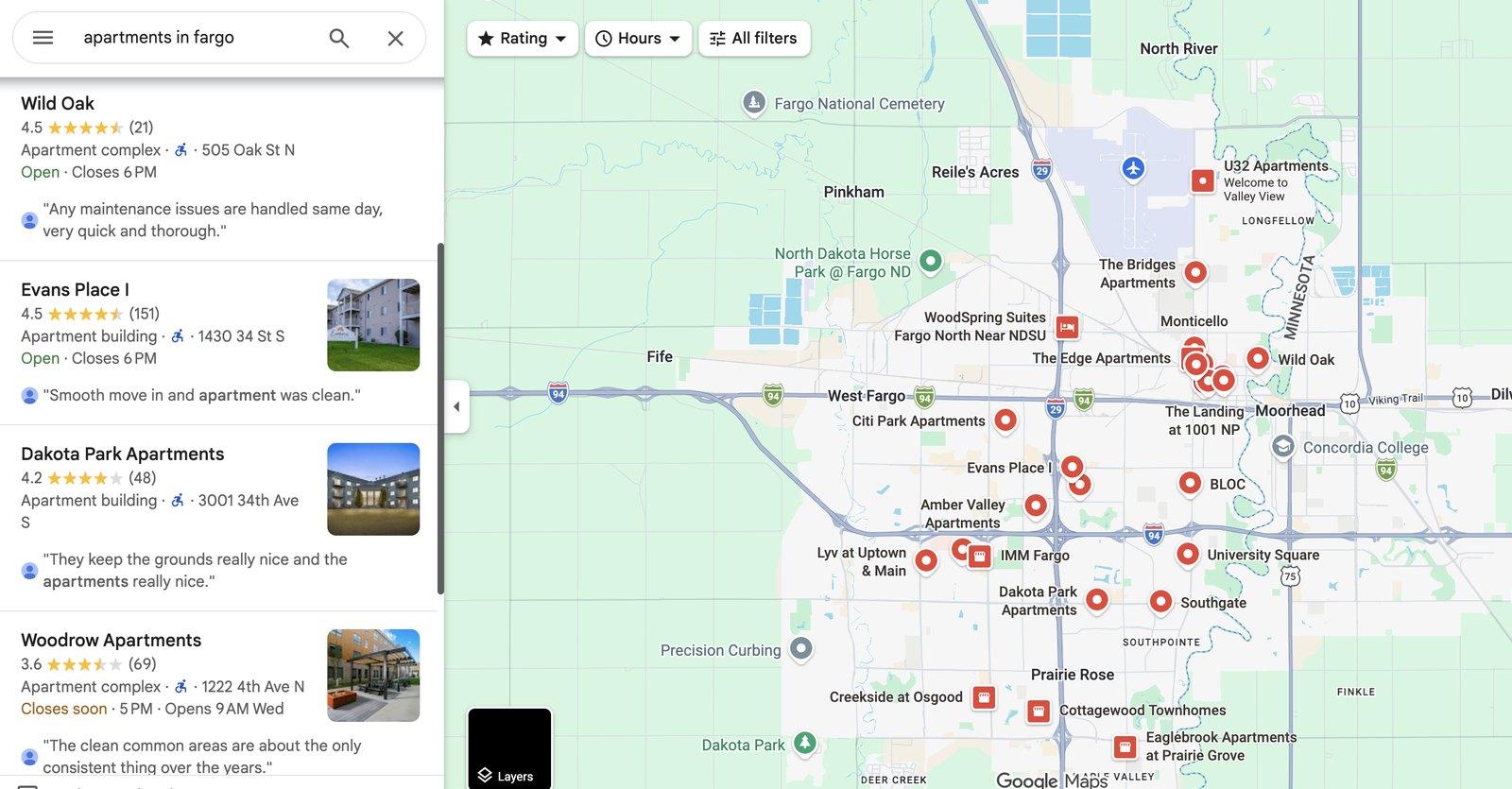
That flips a habit most of us have. If you’re in a dense neighborhood, stop optimizing for the city. Google is only reaching a few blocks to fill twenty results, so the city is far wider than the fight you’re actually in. And if you’re in a sparse or suburban market, stop optimizing for the neighborhood. Google is reaching miles out to find twenty communities, so a neighborhood term is narrower than the field you’re competing against.
Do this: Google’s own numbers stop at the 20-result target. The practical translation, and this part is ours: find the twenty closest competing communities to your property. Whatever geography contains them is your real comp set, and that’s the geography your content, categories and location pages should speak to.
Part 2 · Why your fixes don’t stick
6. Your edit is a vote, not a verdict
Bottom line: Google collects your community’s facts from many places and picks between them. Your correction is one input, and some fields carry a bar your edit has to clear before it’s allowed to replace what’s there.
Google’s code
Google isn’t storing “the pet fee is $300 because the property said so.” It’s storing “$300, per one source” alongside “$25 a month, per another,” with a reliability rating attached to each. When sources disagree, the default isn’t a vote. Google takes the first acceptable answer from its own ranked list.
This is why the pet fee you fixed in March is wrong again.
To be straight with you: you can’t see that source list or those ratings. They’re internal. What you can see is the symptom. If a correction reverts, or never takes, something else is supplying that field.
7. Make every source agree instead
Bottom line: Google pulls place data from 793 different providers, and it tracks which one supplied which field.
Google’s code
Provenance is tracked field by field, which means your address can arrive from one provider and your phone number from another. Directory data sits in the middle of Google’s trust scale, above an unknown source and below a reliable one.
Where your community’s facts actually live
- Your property website
- Every listing site profile
- Directories and data aggregators
- Your PMS feed
- Public contributions in Maps
You can’t win an argument you can’t see. You can end it.
Do this: next time a fix doesn’t stick, stop re-fixing it. Go search the fact itself. Type your community name plus the pet fee, the office hours, the phone number, whatever reverted, and see where else on the internet that information lives. Check your listing site profiles, old directory entries, the previous management company’s pages, aggregator sites you’ve never heard of. Odds are the wrong version is still sitting somewhere, and Google is reading it. Correct it at the source, or get the record removed, and then your profile edit has nothing left to argue with.
That turns a recurring fire into a one time fix.
Part 3 · What Google actually changed in 2026
8. Strangers can now edit your listing, and Google gives them points for it
Bottom line: Two live features let the public change your hours, mark you closed, edit your attributes, and post tips about your community.
Google’s documentation
Tell Maps is the new one, an AI-assisted contribution tool that rolled out this fall. People can report business hours, mark places closed, edit place attributes, share local tips, and upload photos. Tips can surface publicly in the “Know before you go” panel. Separately, and this one isn’t new, Check the facts invites users to confirm whether a place exists, whether its hours are right, and whether it’s closed. Google awards points for participating.
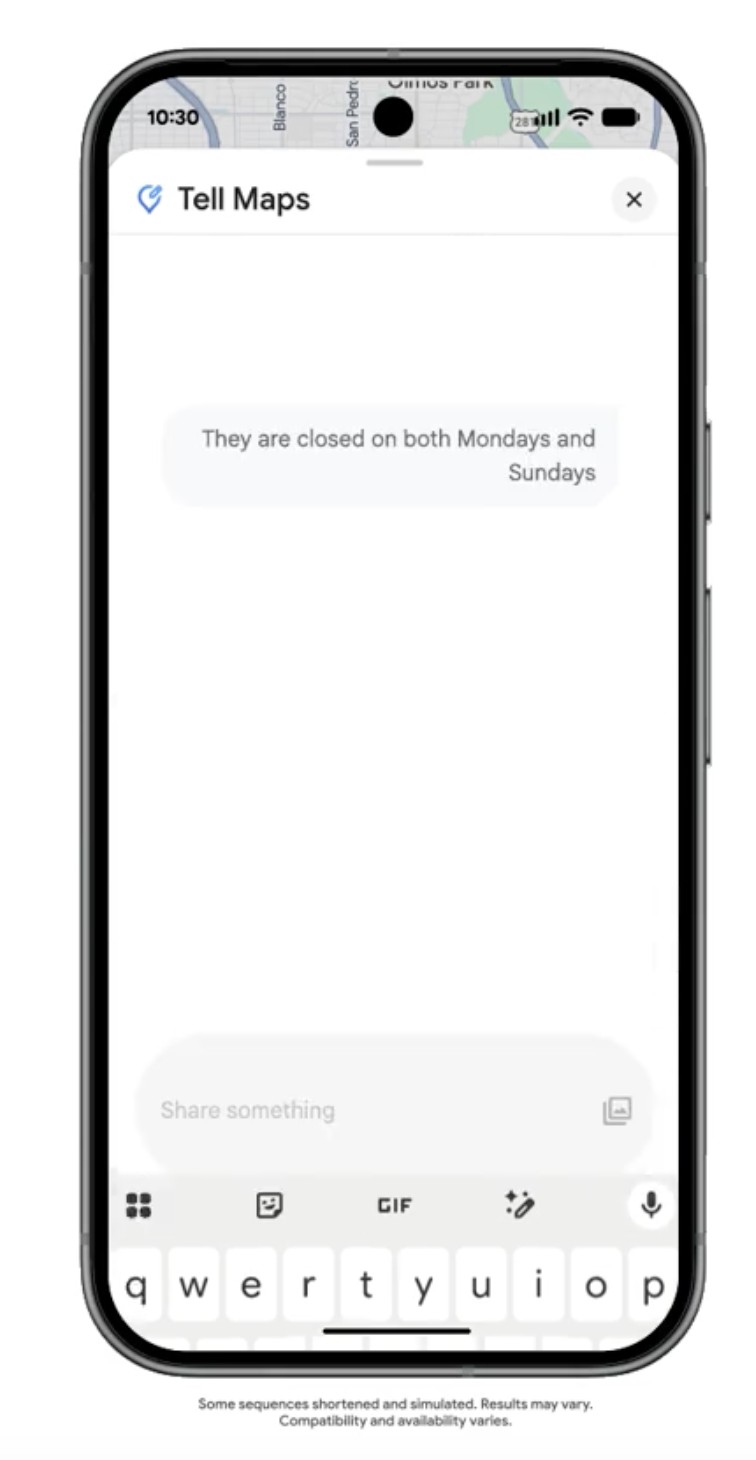
A former resident with opinions about your office hours now has a Google-sanctioned path to change them.
Worth noting: Google hasn’t released details yet on whether profile owners get notified when someone contributes, or how to dispute a contribution you disagree with. We’re keeping our eyes peeled and will update this piece when they announce more.
Do this: put a profile check on somebody’s calendar, weekly if you’re in lease-up or a competitive market, monthly at minimum everywhere else.
9. Google says its own AI recommends places using personal history
Bottom line: Ask Maps launched in March. It draws on more than 300 million places and, in Google’s words, personalizes results using the searcher’s history and saved places.
Google’s documentation
Google’s announcement describes a conversational tool that answers complex location questions and builds a custom map of the options.
Read that again, because it changes what you can measure. Two renters asking the identical question get different communities back. There is no “the ranking” to go check.
The good news is that Google now gives you first-party reporting instead of leaving you to guess.
1
Search Console, Generative AI report. Added in June and available worldwide since the end of August. Shows how often your site’s links appear in AI Overviews and AI Mode, by page, country, device and date. Two caveats: the two surfaces are reported together and can’t be separated, and your site needs enough impressions before the report appears at all.
2
Business Profile performance report. Already shows the actual search terms people used to find your community, plus views, direction requests, calls and website clicks.
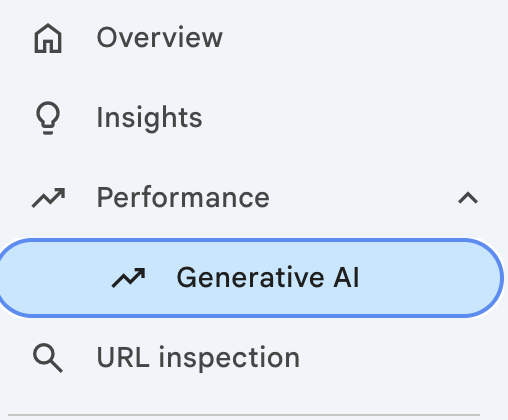
Do this: stop asking where you rank. Open the Generative AI report in Search Console and watch your impression trend, then use the search terms in your Business Profile report to see what renters are actually typing. Between the two, you’re working from Google’s numbers instead of somebody’s estimate.
10. Set your posts to repeat instead of rewriting them every month
Bottom line: Google lets you schedule a post and set it to republish on a recurring basis, weekly, monthly, or a custom cadence. Most teams don’t know the option is there.
Google’s documentation
It’s the Repeats dropdown, sitting right next to “Schedule this post.”
The posts worth repeating are the evergreen ones, the facts about your community that don’t change month to month.
Do this: pick the thing that makes your community an easy yes and set it to repeat monthly. If you’re a zero deposit community, that’s your post. If your pet policy is more generous than everyone around you, that’s your post. Same for included utilities, a waived admin fee, or genuinely flexible lease terms. Write it once, set it to repeat, and it keeps working while you go deal with something else.
Part 4 · What renters are actually doing
11. Ask residents to name the thing
Bottom line: Google doesn’t file a review as a block of text. It identifies the specific topics inside it and remembers exactly where each one appears.
Google’s code
A review isn’t stored as a sentence. It’s stored with the topic identified and the character positions where that topic gets discussed. Resoneo also found those topics carry from listing to listing, independent of the business holding them.
Renters are looking. In the 2025 SatisFacts study, 82.3% researched their own community’s online ratings before making contact, the highest that figure has been since 2017. (The same study puts ratings sites at 45.9% as a general search channel, which is a different question. Both numbers are real.)
“Great place to live” gives Google nothing to work with. “The dog park is actually fenced and the package room is secure” gives it two topics it can index and quote.
Do this: rewrite your review request to ask about one specific amenity by name.
12. Don’t move budget for 4% of renters
Bottom line: Somewhere between 4% and 11.5% of renters use AI tools to search. Many more say they would. And AI answers are too unstable to track as rankings.
The two best surveys disagree, and the gap is instructive. Apartments.com’s summer survey of about 27,000 renters found 4% currently use AI chatbots for their rental search, while 41% said they’d likely rely on an AI recommendation. SatisFacts put current use at 11.5%. We’re not going to average them. Different questions, different samples, and both point the same direction: intent is running well ahead of behavior.
On top of that, a 2026 SparkToro study of nearly 3,000 prompt runs found under a 1 in 100 chance that ChatGPT or Google’s AI returns the same list of brand names twice. If a vendor sells you an AI ranking position, they’re selling you a coin flip.
Do this: fix the foundation instead of chasing the trend. Accurate categories, consistent facts across every source, reviews with real detail, a website Google trusts as the authority on your community. That work pays off on the map today and in AI answers tomorrow, because good AI search and AEO are still built on the foundation of good SEO. There’s no version of this where you skip the fundamentals and win the new thing.
How Resi thinks about this
Local search and AI search decide whether a community gets found before a renter ever reaches a website. That makes it our problem, not somebody else’s.
So we read Google’s documentation and Google’s own code instead of the recaps, and we tell you where the evidence stops. A lot of the local SEO advice circulating right now traces back to a blog citing a blog. When we can’t find the original source for a claim, we leave the claim out.
The bottom line
Google isn’t checking whether your profile is filled out. It’s deciding what to believe about your community from a pile of competing sources, and your profile is only one of them. Completeness was the old game. Agreement is the new one.
Number two is the one to run today. List every community and its primary category, find the disagreements, and fix them. Most operators find real inconsistency, and it takes an afternoon.
Frequently Asked Questions
Your primary category. Google’s internal ranking code stores the primary category at full value and every additional category at zero, so it functions as a switch rather than a scale. Adding more categories doesn’t build partial credit. Getting the primary right, whether that’s apartment complex, student housing, or senior apartment, is the single highest-leverage change on the profile.
Because Google treats your edit as one source among many. It collects facts about your community from hundreds of data providers and tracks which one supplied each field, with a reliability rating attached. When two sources disagree, Google doesn’t average them or hold a vote, it takes the first acceptable answer from its own ranked list. Some fields also carry a threshold a new edit has to clear before it’s allowed to replace the existing value. The fix is to find and correct the outside source still publishing the wrong version, rather than re-editing your profile.
Yes. In the 2025 SatisFacts renter study, 41.4% of renters said they searched using local maps, ahead of the 46% who used search engines generally and well ahead of AI tools at 11.5%. Listing sites still lead at 65%, but map search is now a mainstream part of how renters find communities.
Use Google’s own reporting rather than a third-party score. Search Console now includes a Generative AI performance report, available worldwide since August 2026, showing how often your site’s links appear in AI Overviews and AI Mode. Two limits: the two surfaces are reported together and can’t be separated, and your site needs enough impressions before the report appears. Don’t track a ranking position in AI answers. A 2026 SparkToro study of nearly 3,000 prompt runs found under a 1 in 100 chance that ChatGPT or Google’s AI returns the same list of names twice.
Weekly during lease-up or in a competitive submarket, monthly at minimum everywhere else. Google now offers the public documented ways to change your listing: Tell Maps lets contributors report hours, mark a place closed, and edit place attributes, and the Check the facts feature awards points for confirming or correcting business information. Google hasn’t published whether owners are notified when someone contributes.
