
Schema Is the Icing, Not the Cake: What Actually Gets Your Apartment Website Cited by AI

Summary
Renters are starting their search inside AI. They ask ChatGPT for pet-friendly two-bedrooms near the office, or they read the AI Overview at the top of a Google result before they ever click. So every vendor in the space now has the same pitch: add schema markup and AI will cite your property.
It sounds technical enough to be true. It mostly isn’t.
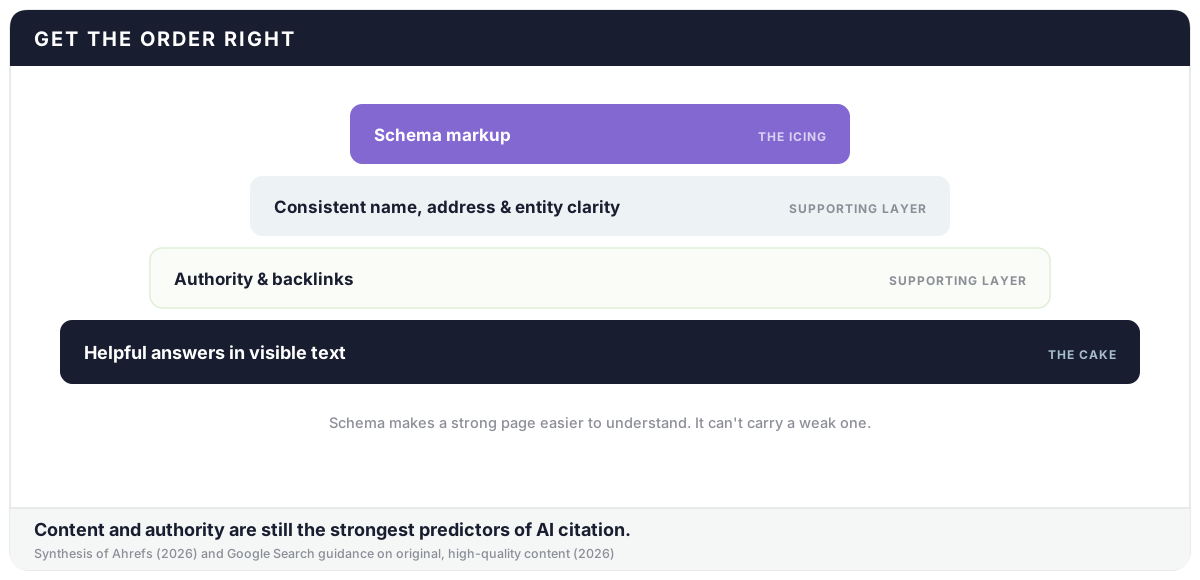
Schema helps machines understand your page. Content and authority get you cited. That’s the whole thing. Schema is real, it’s worth doing, and Resi has shipped it automatically on every property site for years. But it’s the icing. The cake is a page that answers the question in plain, visible text, on a site AI already trusts.
Here’s what the research actually shows, where structured data earns its place on an apartment website, and where the hype falls apart.
What Schema Actually Does
Structured data (the JSON-LD that sites publish in the page code) gives search engines and AI systems explicit signals about a page. This is Organization X. It’s an apartment community at address Y. It has these floor plans at these prices. Without that markup, the system has to infer those relationships from your text, and inference introduces errors.
So schema’s real job is reducing ambiguity. It helps a machine understand what your page is about and which entity it belongs to. That’s comprehension, not promotion. There is no ranking signal called “has schema” that pushes you up in an AI answer. Frame it that way and the rest of the picture gets a lot clearer.
How AI Actually Reads Your Page
This is the part most schema pitches skip, and it’s the part that matters most.
When an AI system pulls your page to write an answer, it usually works from the rendered text, the words a human sees, not the raw code. The JSON-LD sitting in your page’s head often gets stripped out before it ever reaches the model.
This isn’t a theory. An experiment by searchVIU1 tested whether five major AI systems (ChatGPT, Claude, Perplexity, Gemini, and Google AI Mode) actually used schema markup when fetching a page in real time. None of them did. During direct retrieval, every system pulled only the visible HTML content. The JSON-LD was ignored.
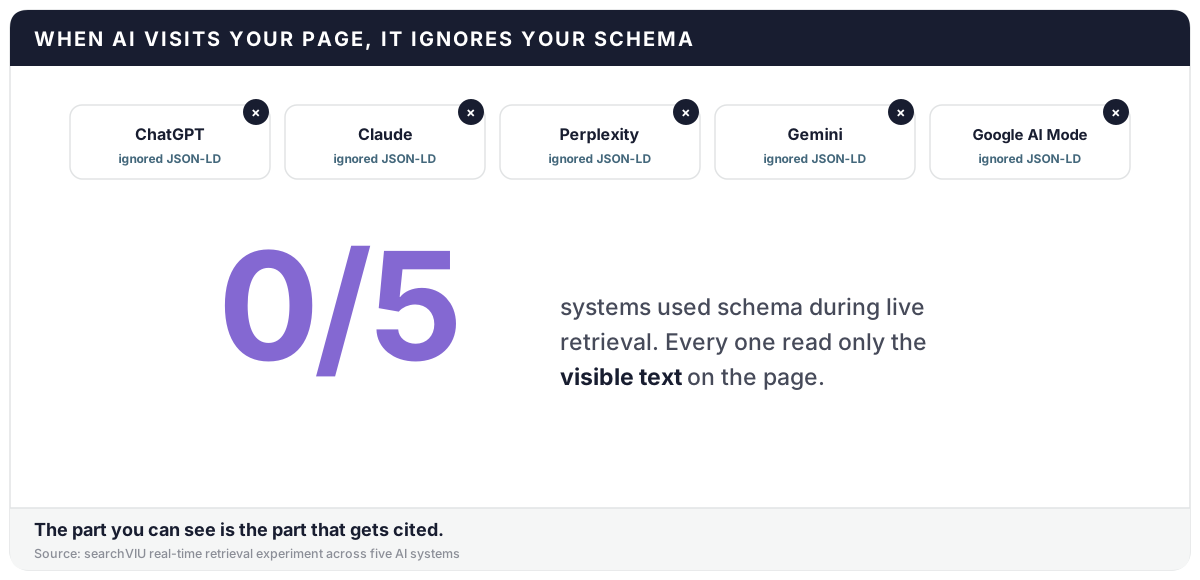
So the thing that earns a citation is the visible text on the page: a direct answer near the top, clear headings written the way people ask questions, short sentences a machine can lift cleanly. The takeaway for your property website: put the actual answer in plain text on the page. Schema supports it. It doesn’t replace it.
The Stat That Launched a Thousand Sales Pitches
You’ve probably seen the number. Ahrefs2 analyzed 6 million URLs and found that pages cited by AI were almost three times more likely to have JSON-LD schema than pages that weren’t. In a follow-up, they found 53% of AI-cited pages were running schema.
That’s a real gap, and it’s exactly the kind of stat that ends up on a conference slide as proof that schema drives AI visibility. It doesn’t prove that. It’s correlation, and here’s the tell.
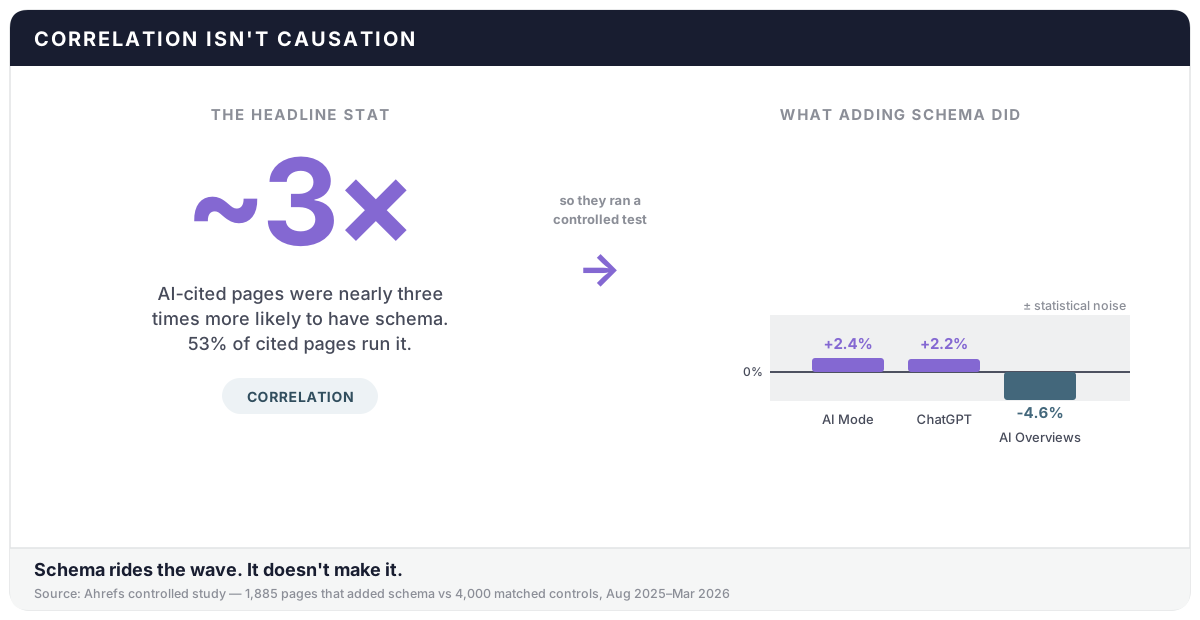
Ahrefs ran a proper controlled test: they tracked 1,885 pages that added schema between August 2025 and March 2026 and compared them against 4,000 similar pages that didn’t. If schema were the lever, the pages that added it should have pulled ahead.
They barely moved. Citations changed by +2.4% on Google AI Mode and +2.2% on ChatGPT, both small enough to be statistical noise, and actually dipped slightly on AI Overviews. Adding schema to pages that were already being cited did almost nothing.
Ahrefs’ own read on why the correlation looks so strong: sites that add structured data also tend to invest in technical SEO, publish stronger content, earn more links, and maintain their pages. Cited pages over-index on all of those signals at once. Schema rides the wave. It doesn’t make it.
To be fair to the other side, not every study lands in the same place. A roundup from Analyzify3 collected several that found positive results: AirOps and Kevin Indig saw JSON-LD pages cited at a higher rate than pages without it, Digital Applied found schema-marked pages cited more than twice as often in Google AI Overviews, and a UC Berkeley framework flagged structured data as a meaningful predictor of citation. The honest reading across all of it: schema shows up as a consistent positive signal, especially inside Google’s ecosystem, but no one has shown it works as a standalone lever, and the effect is uneven across platforms.
Where Schema Earns Its Place on an Apartment Website
None of this means skip schema. It means use the types that do real work and stop chasing the ones that don’t. For a multifamily site, structured data earns its place in a few specific ways.
Entity clarity. Organization and ApartmentComplex markup, with accurate name, address, and geo-coordinates, help AI systems identify your community as a distinct entity and attribute the right source. If your property name overlaps with other businesses, this is the strongest thing schema does for you. Linking out to official profiles (the sameAs connections to your LinkedIn, your Google Business Profile, and other verified listings) reinforces which entity you actually are.
Local signals. LocalBusiness data with consistent name, address, and phone across the web is exactly what powers local and map results, where most renters are actually looking. Schema only helps here if that information is consistent everywhere it appears.
Floor plans, pricing, and reviews. Machine-readable pricing, unit availability, and aggregate review data are easy for engines to consume without interpretation, which helps on the high-intent pages where someone is comparing communities. These are some of the biggest practical wins for a property site.
Where It Does Less Than the Hype Says
FAQ markup. This one changed, so update your talking points. FAQ rich results (the expandable questions that used to show under a search listing) have been deprecated. The markup isn’t harmful, and search engines still use FAQ data to help understand a page, but do not treat FAQ schema as a strong AI-citation play. The win now comes from putting the questions and answers in visible text on the page, where AI can actually read them.
Breadcrumb and navigation markup. Useful for tidy search listings. It won’t move your AI visibility.
Schema on thin pages. Markup can’t rescue a page that doesn’t say anything. If the content is weak, structured data just describes weak content more clearly.
What This Means for Your Property Website
The advice that actually moves the needle isn’t glamorous, which is probably why it sells less well than a schema silver bullet. Put the answer in clean, visible text near the top of the page. Write headings the way renters ask questions. Keep your community’s name, address, and contact details consistent everywhere they appear online. Invest in genuinely useful content and the authority that comes from other sites referencing you. Google4 has been signaling the same priority in its own AI products, rolling out features that surface original, high-quality, and highly-cited content. The through-line is quality and trust, not markup.
How Resi Handles It
Every Resi property website publishes clean JSON-LD generated from your live property data, and it stays in sync when anything changes. Your Organization, ApartmentComplex, local, floor-plan, and review data is marked up correctly without anyone touching code. Most sites bolt schema on once and let it go stale. Resi regenerates it from source data on every page load. That’s the icing handled, so your team can focus on the cake.
The Bottom Line
Implement the schema that matters (Organization, ApartmentComplex, local, floor plans, and reviews) and implement it correctly. Skip the types that don’t earn their keep. Put your real answers in visible text, because that’s what AI actually extracts. And keep the focus on content quality and authority, still the strongest predictors of whether AI cites you at all.
Schema is the icing. Don’t let anyone sell it to you as the cake.
See how Resi builds structured data into every property website, automatically. Book a demo.
Sources
- searchVIU, real-time schema retrieval experiment across ChatGPT, Claude, Perplexity, Gemini, and Google AI Mode. https://www.searchviu.com/en/schema-markup-and-ai-in-2025-what-chatgpt-claude-perplexity-gemini-really-see/ ↩︎
- Ahrefs, “We Tracked 1,885 Pages Adding Schema. AI Citations Barely Moved.” (May 2026). https://ahrefs.com/blog/schema-ai-citations/ ↩︎
- Analyzify, “Does Schema Markup Help AI Citations? What Studies Found” (May 2026), citing AirOps/Kevin Indig, Digital Applied, and UC Berkeley GEO-16. https://analyzify.com/hub/schema-markup-ai-citations-research ↩︎
- Google, The Keyword, “New ways to find your favorite sources and original content in AI Search” (May 2026). https://blog.google/products-and-platforms/products/search/original-high-quality-content-search/ ↩︎
Frequently Asked Questions
Not on its own. Schema helps AI systems understand and correctly identify your page, but the controlled research shows that adding it to a page doesn’t reliably increase AI citations. What gets you cited is a clear answer in visible text, on a site AI already trusts. Schema supports that work; it doesn’t replace it.
Because the sites that add structured data also tend to do everything else well: strong content, technical SEO, backlinks, and well-maintained pages. Those are the signals AI actually rewards. Schema tends to travel with them, which is why cited pages so often have it. That’s correlation, not proof that schema is the cause.
The FAQ rich results that used to appear in search have been deprecated, so don’t add FAQ schema expecting star treatment in AI answers. The real value now is having your questions and answers in visible text on the page, where AI can read them. Keep a genuine, visible FAQ page. The markup is a bonus, not the point.
Organization and ApartmentComplex for entity clarity, LocalBusiness data for local and map visibility, and floor-plan pricing, availability, and review markup for your high-intent comparison pages. These are the types that do real work. Breadcrumb and navigation markup won’t move your AI visibility.
Not on Resi. Every Resi property website generates clean, accurate JSON-LD from your live property data and keeps it in sync automatically, no plugins or manual markup required. That frees your team to focus on the content and authority that actually drive AI visibility.
