We're headed to AIM May 3-6!

Author: Jaidyn Hammond

How to Market Affordable Housing Communities Online

If you’re responsible for marketing affordable housing developments, you know that reaching potential tenants can be a challenge. Traditional marketing channels may not be as effective in reaching your target audience, and advertising on these channels can be expensive. Additionally, using the same tactics that you would to market a “luxury” multifamily complex may not yield the same return on investment (i.e leads) when applied to affordable housing.

Multifamily marketers may think that they have their work cut out for them when it comes to marketing affordable housing online, but while there may be some challenges, there are also many opportunities to reach and engage potential residents in a cost-effective way. At the end of the day (or the campaign), it comes down to one key tenet of marketing: knowing your audience and understanding how to best reach them.

What makes marketing affordable housing different?

The U.S. Department of Housing and Urban Development (HUD) defines affordable housing as “safe, decent, and affordable shelter for all Americans.” According to HUD, a household is considered overburdened if it spends more than 30% of its income on housing costs.

While public housing and publicly subsidized housing are included under the umbrella of what is “affordable” in real estate, the term is most often used in relation to market-rate housing that is affordable for a specific income bracket. Quality affordable housing is a great community addition, providing “greater tax generation, creation of jobs, opportunities for economic development, increased job retention and productivity, and the ability to address inequality”, according to Habitat.org.

With benefits like that, it’s easy for marketers to think that affordable properties will sell themselves, but without a targeted marketing strategy, marketing campaigns can end up attracting too many unqualified leads and not enough of those they are aiming to connect with.

Audience is the most crucial step in understanding the best way to market affordable housing – so you know who you are trying to reach, what obstacles may be in the way, and what resources are available to overcome these obstacles.

If you are marketing a property with income-restrictions, you’re aiming for those who fall only within those income limits, so what can you do to ensure you’re reaching prospects who actually qualify for your community?

Choosing digital over traditional marketing tactics

https://www.pewresearch.org/internet/chart/smartphone-dependency-by-income/iframe/
Pew Research Center, 2021

While print has been a useful avenue for marketing affordable properties to accommodate potential access issues, nearly 9 in 10 Americans today are online. Though print can be effective, when your marketing budget is constrained, it can be a better investment to put your dollars into digital marketing.

Marketing using social media, blogs, and email campaigns can all be effective in increasing visibility and engagement with your property and can be easily done in-house. Marketing online is also shown to perform better and experience a higher ROI than print or other traditional forms of advertising, while spending less overall.

Marketing online also guarantees more control over your advertising campaigns – from audience targeting to budget. Digital marketing materials are also more adaptive as they can be quickly adjusted to address changes in both community and property needs – say, if there’s an uptick in searches for affordable two bedroom homes or suddenly you have multiple one bedroom vacancies. For this reason, it’s important to consider putting more of an emphasis on your digital marketing strategy and optimizing your digital marketing assets, especially for mobile use.

What is a mobile-first digital marketing approach?

Optimizing for mobile requires an established online presence informed by your understanding of your audience. When Americans with lower incomes tend to rely on their smartphones more than any other device, ensuring those marketing materials are mobile compatible can greatly influence your ability to communicate that presence and connect with your target market. Here’s what you can do to implement a mobile-first approach: 

  1. Mobile-friendly, branded website

A mobile-friendly, branded website is key in today’s market. Like with conventional apartment marketing, a branded website can do wonders for legitimizing your brand and expanding your brand’s community reach. But, being mobile-friendly is essential and means more than finding a way to easily communicate your brand presence; it also means assessing your site’s web accessibility, loading speeds, and website responsiveness on a mobile device to ensure that people with accessibility needs can access your marketing materials. 

  1. Mobile-first ads 

Pay close attention to your campaign analytics; if your audience is reported as mostly engaging with your brand on a mobile device, you should be utilizing that device information in your campaign moving forward. By targeting mobile devices and tablets more intentionally, you are meeting your target audience where they are and using user data to your advantage.

  1. Imagery

Be mindful of how the UI experience can change between desktop and mobile devices. Choose photography and design styles better suited for portrait-mode on a mobile device, so your brand can transition as seamlessly as possible. This also means reviewing the mobile-view of your ads before you publish them, so you can rest assured that your ad translates well to a mobile interface.

  1. Advertise to mobile-friendly social media platforms

Investing in your brand makes for an easy conversion to social media platforms, which you should definitely be taking advantage of throughout your affordable housing campaign.

Advertising through mobile-friendly social platforms allows you to select the channels on which you want your ads to run, while also giving you the ability to target a very specific audience. You can use these platforms to share information about your community, drive traffic back to your website, or promote current vacancies. By utilizing either organic or paid social media posts, you can reach individuals who may not be actively searching for housing – making social media an excellent way to get in front of a new audience.

These all may seem like tedious tasks, but with a mobile-first approach, these factors can make all the difference in how prospects experience your brand. When so many prospects are experiencing your brand for the first time on the small screen, mobile accessibility to your community should be prioritized.

How can we better qualify the leads for our onsite teams?

Capturing the community’s attention is only one obstacle when it comes to marketing affordable housing. Another is that oftentimes affordable properties may snag lots of prospects, but only a small few of them are actually qualified to be reviewed by their leasing team.

This can cause a big headache for their leasing office and compliance team as they spend unnecessary time reviewing prospects who don’t meet income requirements. It can also be a turnoff for prospects who are interested in the property but don’t want to waste their time applying if they don’t meet the requirements.

Do You Qualify? - HPD
NYC Department of Housing Preservation and Development

Provide Clear Guidelines

To combat this, some properties provide very clear guidelines for their income restrictions on their website or their ILS listing, so renters who are interested in their property can know if they may qualify before they even apply. The chart above from the NYC Department of Housing Preservation and Development is an example of a great way to convey this information.

Ask Screening Questions

Other properties may ask a few automated screening questions about income or other prospect information before allowing applications to be sent out.

Create An Online Calculator

Having an income and expense calculator can also be very helpful to your prospects who manage strict budgets, so transparency is key when it comes to attracting qualified leads. Not sure how to get one on your website? Ask if your current website provider can provide this, or speak to a Resi rep about our great affordable housing website solutions.

Use A Third Party For Verification

Some property managers choose to go a step further in the qualifying process and outsource income verification to third parties like Snappt Inc, ensuring the applications that come across their desk are almost certainly qualified candidates for the property.

All of the above are very attainable solutions that will take steps to improving lead quality, allowing for greater productivity of your team, with far fewer headaches.

Utilizing community engagement

Even if you choose not to invest much into the traditional marketing route of flyers, broadcasts, and billboards, it’s still important to engage with the community. One crucial aspect of understanding your audience and the value an affordable community can bring to a city is understanding that the primary target of affordable housing are the very people who hold the community together.

This could be teachers, grocery store clerks, or any other public-serving professions. These people are the lifeblood of a city. They’re the ones who interact with the public on a day-to-day basis and they’re the ones who have a pulse on what the needs of their community are. By engaging with them, you’re not only marketing your affordable housing community to the people who need it the most, you’re also getting invaluable feedback on what the needs of your target audience are.

Here are a few community engagement ideas to get you started: 

  • Create blog posts featuring community members or events of the city
  • Engage with and promote reviews from your residents to boost your community reputation
  • Partner with local businesses. This could look like collecting exclusive discounts for your residents, participating in the local chamber of commerce events, or sponsoring the local farmer’s market. By partnering with organizations, you’re not only building goodwill within the community, you’re also getting your name out there and making it known.
bus passing through shed

Community also includes amenities, which should be another focus of your affordable housing campaign. If your property is located near convenient commercial spaces and public transportation, you need to make sure these amenities are highlighted.

High quality and relevant amenities can be key selling points for your property, and some you may not be able to afford to miss. A gorgeous, well-kept pool or extensive 24-hour gym may be an awesome amenity, but it may not mean much to your renters with different priorities.

This is why community engagement is so important; finding out what your community wants and will use can provide direction for the property’s development and marketing strategy. Conduct in-person surveys or use survey tools such as Typeform or SurveyMonkey to hear directly from the community. If you’re worried about response volume, you can incentivize insightful responses by offering small rewards to encourage community members to take the survey.

Community engagement also looks like inviting the community into your space. Cement your place in the community by literally becoming part of it; amenities that are open to the public are a great way to cultivate a positive image and become an attractive asset to the community.

Hosting events and providing your commercial and amenity spaces to events and groups that align with the interests of your target audience is also an admirable way to engage with the community. This could be anything from art classes and concerts to after-school programs or fitness classes. By becoming a hub for activity in the community, you’re not only promoting your development, you’re also becoming an invaluable part of the cityscape. 

This is where many affordable housing developments go wrong! In order to get the most return on their investment, developers will often skimp on the quality or quantity of their community amenities, which leads to a subpar experience for residents and disconnection from the community. This, in turn, creates a negative image of affordable housing that can be difficult to change.

Instead, by investing in quality and offering inclusive and thoughtful amenities, affordable housing developments can become an integral part of the community.

It’s important to remember that when you’re marketing affordable housing, you’re not just selling a product, you’re selling a lifestyle. By marketing the community aspect of your affordable housing development, you’re giving people a reason to choose your development over others.

What else makes a successful affordable housing campaign?

Luckily, many of the strategies and best practices you already know for conventional multifamily marketing still work when marketing affordable housing.

Investing in your community’s online presence via consistent branding and a unique website, social media and paid advertising, listings on popular internet listing services, and a Google My Business listing are all conventional multifamily marketing strategies that thrive in affordable housing.

Additionally, accessibility should be centered in your campaign, from use of clear language in your advertising materials to the creation of high-quality assets like photos or virtual tours of the property. The best strategy for marketing affordable housing is to put the same care and effort into marketing as you would any other property; neglecting to do so can make it challenging to fill up your vacancies or otherwise add to the negative stigma about affordable housing. 

If you take the time to understand the needs and preferences of the affordable housing audience, you’ll be able to create an effective marketing strategy that will help you fill your development with happy, qualified residents.


If you’re looking for multifamily marketing that will impress, look no further than Resi. We specialize in multifamily websites, branding, and marketing, and we have a proven track record of success. Contact us today to learn more about how we can help you market your multifamily housing development.

How Practicing Mindfulness Can Benefit Your Team

Mindfulness has become a popular topic in recent years, and for good reason. But what is it? Mindfulness is simply the act of being aware and present without judgement, a skill that’s often taken for granted, but with practice can completely transform your life. The practice has been shown to have many benefits for both mental and physical health; when we bring mindfulness to our experience, our lives become richer, fuller and more satisfying. We also become better able to handle the challenges that life inevitably brings. But what about its applicability to the multifamily industry? Can mindfulness help us manage our businesses more effectively and live happier lives? The answer is a resounding “yes!” In this blog post, we will explore the science behind mindfulness and how it can benefit multifamily professionals.

What is Mindfulness and Why Does it Matter?

When it comes to mindfulness, the science is clear: the practice can have a profound impact on our lives. For one, incorporating mindfulness into our lives can help us be more effective leaders. A study published in Frontiers in Psychology found that mindfulness training helped business leaders make better decisions, plan more effectively, and act with greater integrity. What’s more, the study found that these benefits were evident not only in the short-term but also in the long-term.

In addition to being more effective leaders, mindfulness can also help us be more successful in our careers overall. A study published in the Journal of Applied Psychology found that mindfulness training helps people perform better at work, experience less burnout, and enjoy greater job satisfaction. Given the high demands of the multifamily industry, these benefits are especially important.

Finally, mindfulness can help us live happier lives both inside and outside of work. Numerous studies have shown that mindfulness reduces stress, improves mood, and increases levels of happiness and life satisfaction. And while we all know that happiness is important in its own right, it’s also worth noting that happy employees are more productive employees. So if you’re looking for a way to boost your career AND your happiness, mindfulness is a great place to start.

The Science Behind Mindfulness

Mindfulness strengthens our neuroplasticity; neuroplasticity is the brain’s ability to change and adapt in response to new experiences. This means that, with practice, we can actually rewire our brains to be more mindful, and absorb all the other positive results that can come from being mindful as well.

A number of studies have found that mindfulness can help us rewire our brains for the better. For instance, one study found that eight weeks of mindfulness training helped participants increase their gray matter density in regions of the brain associated with learning, memory, and emotion regulation. Participants also showed decreases in gray matter density in regions of the brain associated with stress and anxiety. This means that not only are you improving cognitive function, but you’re working to take your body out of “survival mode”, a state in which only basic functioning matters. It’s an adaptive response that’s supposed to help us survive danger and stress, but it’s only meant to be a temporary state. With the psychological stress of everyday human life, many people are stuck in this state for extended periods of time over stressors that are not life and death – and truly, it takes a toll.

In this video, neuroendocrinology researcher Robert Sapolsky describes how closely the human stress response to our psychological troubles resembles the same stress response as animals fighting for their lives.

Another study, this one published by the Association for Psychological Science, found that mindfulness exercises that elicit compassion like Loving-Kindness meditations or body scan practices increase self-compassion and decrease overall self-criticism, leading to better mental and physical health. This is because facilitating self-compassion and generating compassion for others has shown to help relieve the “survival mode” in which many of us often find ourselves.

It’s easy to see how the value of mindfulness can be universal, but mindfulness practices have loads of benefits for multifamily, too. Mindfulness can help to improve communication and cooperation among employees in a multifamily workplace. When everyone is focused and attentive, it is easier to identify and resolve potential conflicts before they become serious problems, and this is beneficial for employees and residents alike! Mindfulness can also help to create a more positive work environment, which can lead to improved productivity and morale, and can help to reduce stress and promote relaxation, both of which are beneficial for employees in any type of job. So not only is mindfulness applicable at the individual level, it can also have a positive impact on the workplace as a whole!

Mindfulness Practices to Try

So what does practicing mindfulness actually look like? If you think practicing mindfulness is sitting in an uncomfortable position for way too long and counting your breaths into oblivion, think again! Mindfulness exercises come in all kinds of varieties, for all kinds of uses to encourage mindfulness in specific areas of life. Here is a playlist of a few, brief (<10 minutes) guided practices to get you started, with descriptors of each practice respective to the order of the playlist below.

  1. Breathing meditations allow you to focus on your breath and center your attention and intentions, allowing for greater focus overall.
  2. Body scan practices bring attention to your body and allow you to reconnect with your physical self – you might notice something about a feeling in your body you were dismissing before.
  3. Open Awareness practices open your awareness to everything that is happening in your environment and in your head – this practice can bring attention to what’s weighing the most heavily on your mind, and it’s important not to shy away from it! It can give you insight into what problems you may need to better prioritize solving.
  4. The Caring practice encourages you to extend compassion to yourself and to others in your life, discouraging self-criticism along the way.
  5. Mindful Eating invites you to savor and be present in your eating experience and understand your cravings and physical hunger cues without judgement.
  6. The Standing and Centering practice is designed to release both physical and mental tension in the body, and is a great stress and anxiety reliever.

When you practice mindfulness, you are training your brain to be more present and aware. This can help to reduce stress and anxiety, and can improve overall mental and physical health. With just a few minutes of practice each day, you can begin to rewire your brain for the better, and start living a more mindful life. And your coworkers and residents will thank you for it! Try out one of the mindfulness practices listed above to get started – you may be surprised at how much difference just a few minutes can make.

12 Pet-Friendly Amenities Your Renters Will Love

When nearly 70% of U.S. households have a pet, it’s more important than ever to have pet-friendly policies in place at your multifamily property. Pet owners looking to rent often struggle to find a pet-friendly apartment, meaning many apartment complexes are missing out on a ton of potential renters. Adding pet amenities to your multifamily property is a great way to make it more attractive to potential residents, can help to create a sense of community among your residents, and, of course, it’s an awesome way to show that you care about your residents’ pets. Not to mention, having inclusive pet policies is great for your bottom line, too; reports show that residents in pet-friendly housing stay 21% longer than they do in non-pet-friendly housing, and pet-friendly vacancies fill much faster than vacancies that don’t accept pets. If you want to attract (and keep) more renters, consider boosting your pet-friendly policies!

So, what are some things you can do to make your rental more pet-friendly? Here are 12 of the best amenities that will make your renters – and their pets – love you.

1. Welcome Gifts

A welcome gift is a thoughtful way to show your new residents that you’re excited to have them move in. Why not include a welcome gift for their pet as well? This could be anything from a toy to a bowl to some treats! Some communities include coupons and listings for local businesses in the area, and including businesses that cater to their pets will show that you really care.

2. Treat Station

Treat stations are one of the easiest pet amenities you can add to your property. All you need is a place to put the treats, and you can stock it with whatever type of treat your pet residents enjoy. You can even add a sign that says “free treats” to let everyone know that your property is pet-friendly.

3. Pet-centric Events

Lots of apartment communities have some form of “yappy hour”, but whatever you want to call it, hosting pet-centric events is a unique way to show your residents that you care about their furry friends. Ideas for pet events are endless, from a doggy ice cream social to a Halloween costume party for pets. These events are usually well-attended and can be a lot of fun for everyone involved.

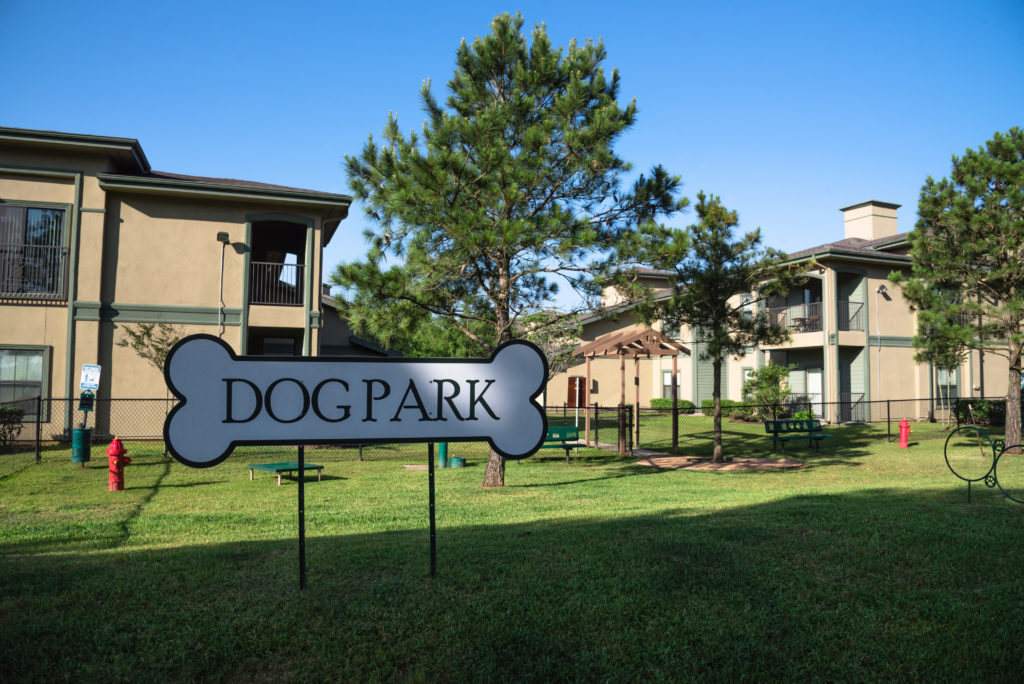
4. Dog Park or Play Area

There are a lot of worthwhile reasons to have a dog park as an apartment amenity. It’s a great place for dogs to socialize and get some exercise, and it’s also a wonderful place for dog owners to meet each other and connect with the community. Another reason to have a dog park is that it can help to keep your apartment complex clean; if dogs are able to relieve themselves in a designated area, it can help to reduce the amount of mess in other areas of the complex. A dog park can also be a premier location to host events for residents, such as dog-themed parties or meetups – the possibilities are infinite!

5. Dog Waste Stations

If you’re a dog owner, you know how important it is to pick up after your pet. But what about when you’re out and about? Dog waste stations provide a place for pet owners to dispose of their dog’s waste, and they’re usually equipped with bags and disposal containers. Keep your residents happy and your property clean by having this pet amenity readily available onsite!

6. Dog Daycare

Dog daycare is another amazing amenity for apartment complexes. While your residents are at work, they won’t need to worry about what their pets are getting up to – instead, they’ll be able to relax knowing that their pets are being well cared for and getting an opportunity to socialize. Like a dog park, dog daycare can also be a good way to meet other pet owners in the complex, and it can help to build a sense of community. Village at Commonwealth by Northwood Ravin is an example of one community in North Carolina that has gone above and beyond for their residents’ pets. While they already have a dog park and spa onsite, they’ve recently added ‘Buddies at Commonwealth’, a dog daycare that operates all day Monday through Friday for their four-legged residents. In addition to this luxurious amenity for pets, they even made booking and billing a streamlined, online process, making this amenity easy to use and convenient for residents, too! Take a look at the adorable video the Northwood Ravin team put together so show off this highly anticipated amenity!

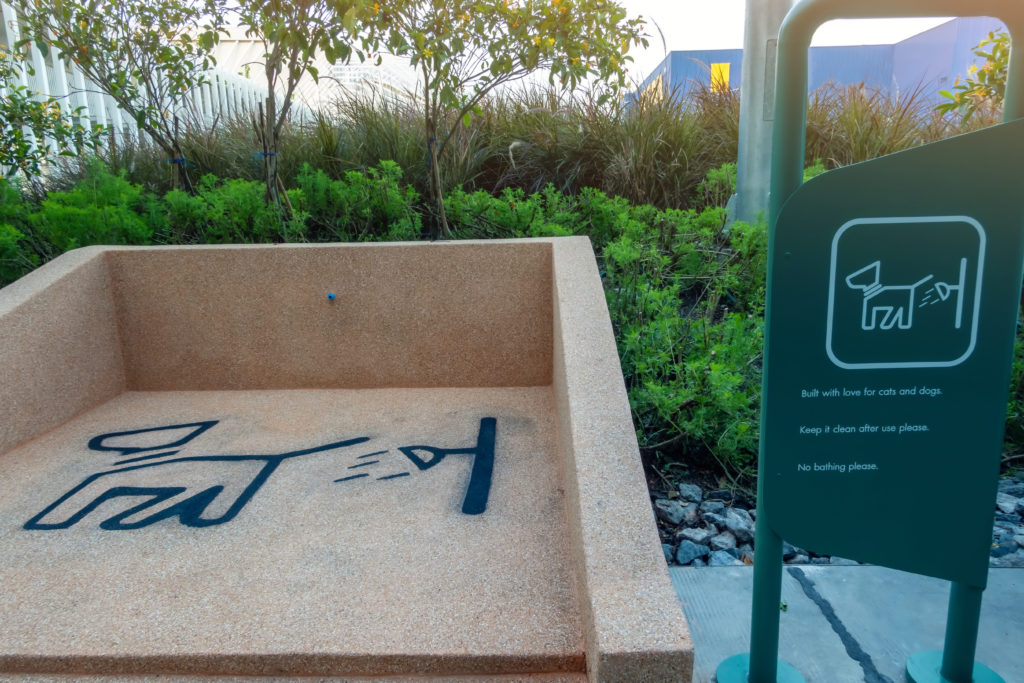
7. Pet Washing Station

Some apartment buildings have a pet washing station available for residents to use. This can be a convenient amenity for pet owners, as it can save them from having to do the messy job of bathing their pets at home, especially if they’ve just spent a day at the dog park. Pet washing stations are also often equipped with all the supplies you need to get the job done, including shampoo, towels, and even blow dryers. This is an awesome perk for pet owners, as it can save them a lot of time and money on grooming costs, but it’s also a great way to make sure that your complex stays clean and pet-friendly. A pet washing station could certainly set your complex apart from the competition, and it’s sure to be appreciated by both your two- and four-legged residents.

8. Pet-Friendly Amenity Spaces

More than just dedicated pet spaces, you can allow your residents to bring their pets into other amenity spaces on your property. Clubhouses, game rooms, lounges, and more are all possible places to allow pets. Just be sure to add some pet-friendly furniture and amenities, like water bowls and beds, to make everyone comfortable. This is a surefire way to let your residents know that your community is welcoming to all, and it’s sure to be appreciated.

9. Pet Concierge

A pet concierge is someone who can help your residents with all of their pet-related needs. They can help to arrange dog walking, pet sitting, and other services available in the area. They can also provide information about local veterinarians, groomers, and pet stores. A pet concierge can make sure that your residents’ pets are always taken care of, and can be a huge help to new residents who are moving to the area with pets.

Some properties have brought their concierge services into the digital sphere, integrating apps for their residents that help pet parents to find and book services like dog walking, grooming, sitting, and more. Resident apps are sure to impress your tenants by providing a host of services that go well beyond pet care, but if you’re looking to really go above and beyond for your pet-owning residents, they’re a great option. Some of our favorites to check out include Elevated Living, Livly, and Flamingo!

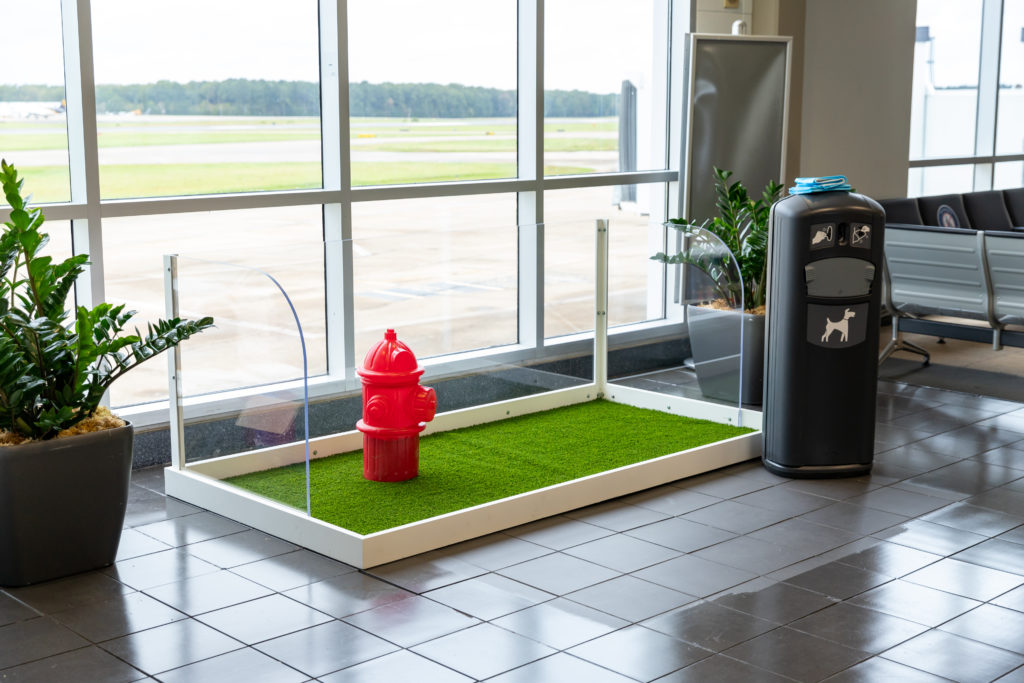
10. Indoor Pet Relief Area

When it’s pouring rain and thunder is rolling overhead, the last thing your residents want to do is take their dog for a walk.  An indoor pet relief area can be the perfect solution to this problem. It can be as simple as a small room with artificial turf, or you could go all out and include an agility course. Either way, your residents will appreciate having a place to take their pets when the weather is bad.

11. Doggie Pool

Many properties feature beautiful, well-cared-for pools onsite for their residents. So why not for their dogs too? A doggie pool is a genius way to keep your residents’ dogs cool in the summer. It’s also an excellent way to provide a fun activity for them where they can socialize with other dogs, and would be a terrific option to keep in mind for those pet-centric resident events. Hosting a pool party has never been so furry, fun, and easy!

12. Allow More Pets

This one is simple; many apartments either don’t allow or only allow a single pet, which poses a problem for the millions of families who have more than one furry friend and are looking for rentals. Adjusting your pet policy to welcome the entire family (pets included) can really show your residents how much you appreciate them.


These are just a few ideas to get you started, but there are endless possibilities when it comes to making your apartment complex pet-friendly. By adding just a few of these amenities, you can really make a difference in the lives of your residents and their pets. And who knows, you might even attract some new residents who are looking for a pet-friendly multifamily complex.

The Value of Website Accessibility in Multifamily

As the world becomes increasingly digital, it’s more important than ever for multifamily property marketing to reflect modern values of accessibility and inclusivity. If you’re a multifamily property marketer, making your website accessible is not only the right thing to do – it’s also good business sense.

Accessibility features can help you attract more leads, and show that you’re inclusive of all potential tenants. If you’re bidding on a contract or RFP, having an accessible website can give you a leg up on the competition. Many organizations are now looking for vendors who can provide an inclusive experience for all users, so being able to show that you’re accessible can help you win new business.

“Making your website accessible is not only the right thing to do – it’s also good business sense.”

Additionally, making your site more accessible also makes it easier for current residents to find the information they need and stay up-to-date on what’s happening at the property. When you make your digital marketing materials accessible, you’re not only making them easier to use for people with disabilities. You’re also opening up your potential customer base and making it easier for anyone to use your materials – and that’s a win-win for everyone involved.

Simply put, if you aren’t taking an accessible approach, you’re losing out on potential residents and opportunities for business growth, and even opening yourself up to potential legal trouble. Below are some simple strategies and examples to help bring your marketing materials to the next level:

Use clear and simple language

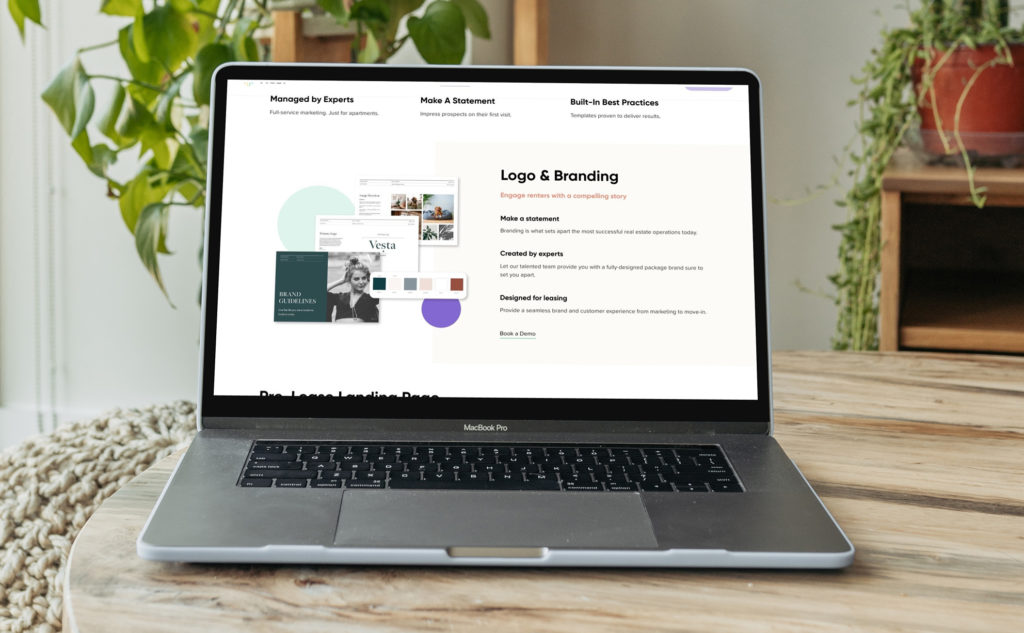
A screenshot from our homepage that shows clear language, hierarchical text formatting, and images.

An important aspect of accessibility is using clear and simple language. Avoid using jargon or complex terms, which can be difficult for people to understand. Use everyday language that everyone can understand, and be sure to explain any technical terms or concepts in a way that everyone can understand.

Pay attention to text format

Break up text into small paragraphs makes it easier to read and digest. Use headings and subheadings to help readers navigate your content. It may seem like a no-brainer, but this strategy can often be overlooked and is extremely effective in increasing accessibility. Take a look at some of these strategies in action in the screenshot taken from our site above.

Take advantage of videos and infographics

Videos and infographics are a great way to convey information in an accessible format. They can be used to provide step-by-step instructions, show how a product works, or give an overview of complex topics. Including lots of photos of the property you are marketing is always a best practice when it comes to multifamily marketing. If you’re looking to design your own graphics, Canva is a great Freemium tool available.

Integrate inclusive design practices

Not everyone has the same level of access to digital content. Some people may have difficulty seeing or reading text, while others may be unable to hear audio or use a mouse. Make sure all of your content is accessible to as many people as possible by providing alternate formats such as text transcripts and audio recordings. Here’s a few other examples of inclusive design practices:

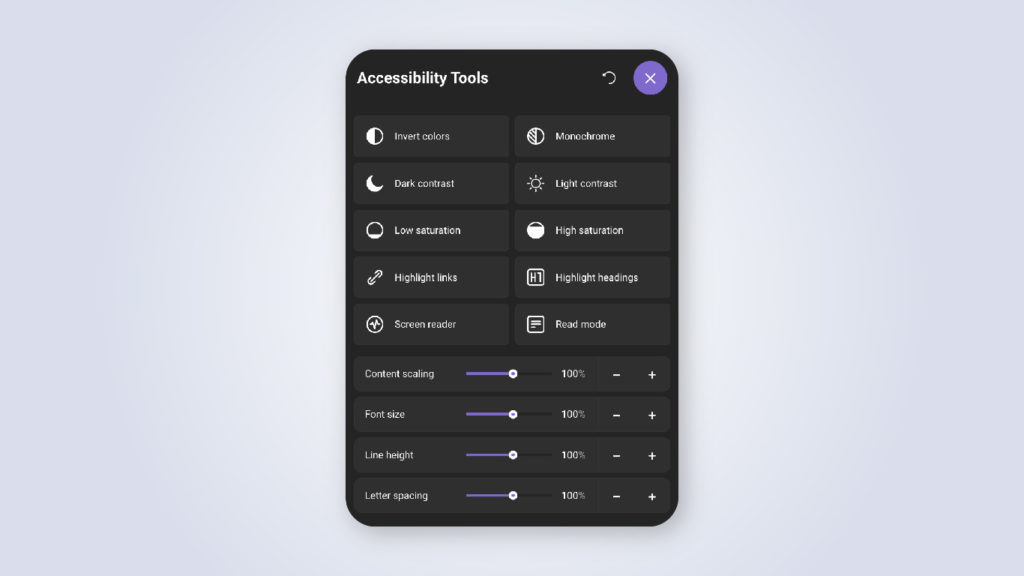
  • Make sure your website is designed using responsive design principles. Including a widget where users can adjust or enable elements like webpage color contrast, text size, or screen reading can exponentially increase accessibility. You may have noticed this tool on our site; if not, here’s a screenshot of the one we use!
  • Use alternative text for all of your images. Alt text is a short description of the image that is read aloud by screen readers. This helps people with visual impairments understand what the image is showing. This way, people who are blind or have low vision can still understand what is on your website. If you’ve enabled screen reading, you can write the alt text in a way that more seamlessly navigates through the information on your webpage.
  • Include captions for all of your videos. This way, people who are deaf or hard of hearing can still enjoy your content.
  • Provide options for people who may not be able to use traditional forms of communication, such as contact forms or live chat features. By considering accessibility in all aspects of your digital marketing, you can create a more inclusive experience for everyone.

Remember, a well-designed website that is easy to use and navigate will help you attract more people to your property. A poorly designed website can discourage people from even considering your property, so it’s important to take the time to design a site that is both user-friendly and accessible.

Don’t forget about mobile users

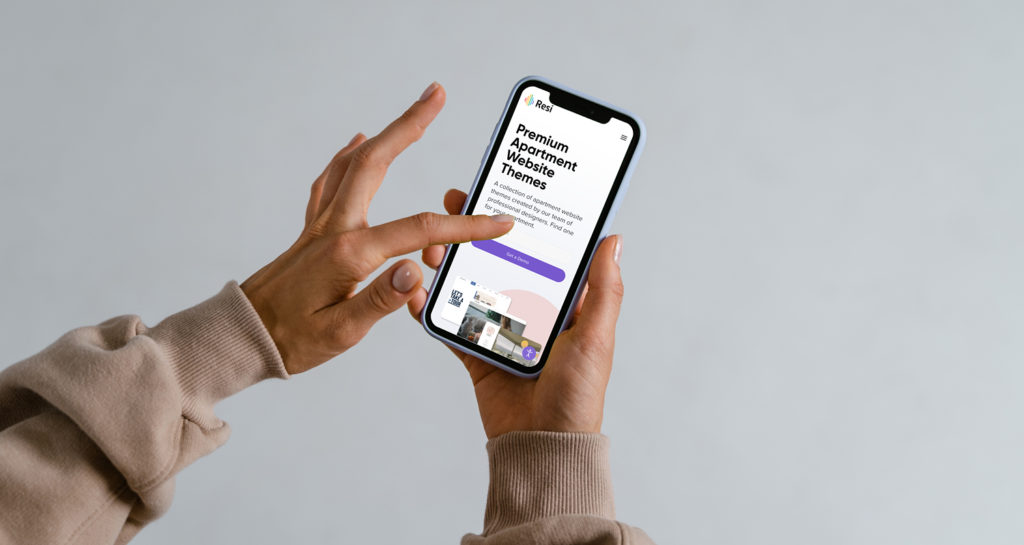
One of the most important things you can do to make your digital marketing more accessible is to optimize your website for mobile use. More and more people are accessing the internet through their phones and tablets, so it’s essential that your website is easy to use for those users. According to this report by Zillow, four out of five renters use online resources to assist in their home search (84 percent). Take a look at our mobile interface below and how we’ve chosen to optimize our site for those users.

Make sure all of your content is easy to read and navigate across all devices, and that all of the links and buttons are easy to tap. Be mindful of how your website features transfer to a mobile interface – there’s nothing more frustrating than trying to load more unit listings and not being able to because a widget is in the way!

While it’s important to make your website as accessible as possible, you also need to think about accessibility when creating digital ads. This includes making sure that your ads are able to be read by screen readers and that they are correctly formatted for mobile users too. Additionally, consider implementing some of the design strategies above when you’re designing creatives for your ads. By keeping accessibility in mind throughout your digital marketing strategy, you can create a more inclusive experience for everyone.

Test it yourself

After you’ve made all of these changes, it’s important to test your website to make sure that it is truly accessible. The best way to do this is to ask someone with a disability to test it out for you. They will be able to give you feedback on what works well and what needs improvement. You can also use online tools such as the WAVE Web Accessibility Evaluation Tool to check for common accessibility issues. By taking these steps, you can be sure that your digital marketing is as inclusive and accessible as possible. Just make sure you regularly check that your accessibility features are working, and don’t be afraid to try out new features.


Looking for ways to transform your marketing and website accessibility? Check out Resi’s services today! We specialize in creating responsive, inclusive, accessible websites for multifamily properties. Contact us today to learn more about how we can help you attract more leads and win new business.

Accessibility should be at the forefront of every digital marketing strategy. Let us show you how easy it can be!